
Table of Contents
Australia: A Dominant Farewell Performance
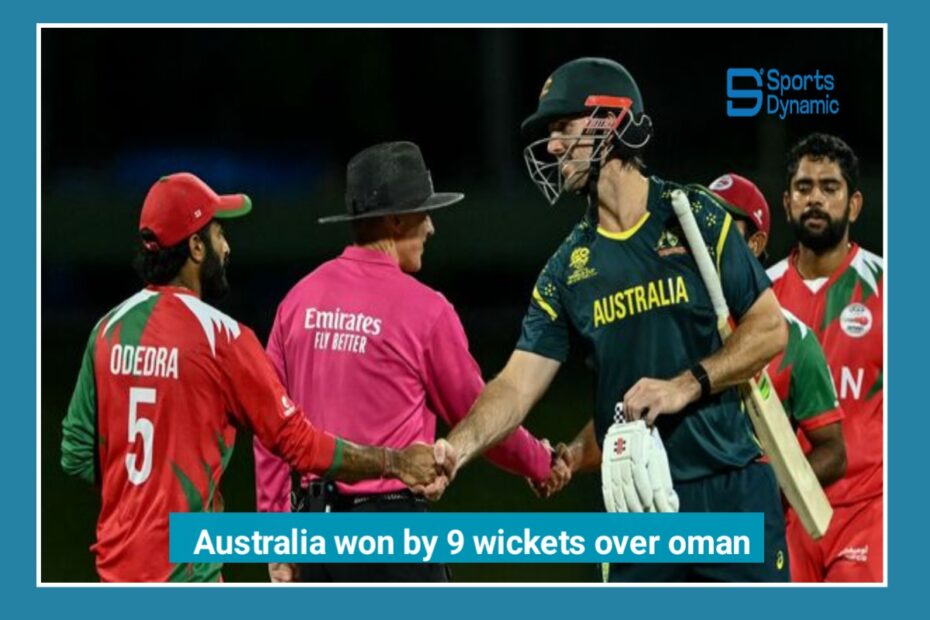
Australia signed off from the T20 World Cup 2026 on a positive note, beating Oman by nine wickets in a pretty one-sided game at the beautiful Pallekele International Cricket Stadium in Kandy. Even though this win didn’t change their fate in the tournament, it still felt important. It was the kind of performance that reminded everyone what Australia are capable of when they get things right. They looked sharp, confident, and completely in control from start to finish.
Before this match even began, Australia already knew they were out of the race for the knockout stage. That had disappointed fans back home, and there had been plenty of debate about team selection, tactics, and how some senior players were handled during the tournament. Many people expected a frustrated or low-energy performance. But instead of letting the pressure or criticism affect them, the Australian players came out determined to prove a point.
Right from the first over, you could sense their intent. The bowlers were switched on immediately. They stuck to tight lines, mixed up their pace cleverly, and didn’t give Oman any easy scoring opportunities. There were no loose deliveries, no casual fielding moments — just pure focus. The energy in the field was high, and every player looked fully committed.
Oman tried to settle in, but Australia never allowed them to feel comfortable. Whenever a small partnership started building, a wicket would fall. The pressure kept building, and it was clear that Australia wanted to dominate every single phase of the game. It wasn’t just about winning; it was about finishing strong and showing their true standard.
Overall, it may not have been enough to keep their World Cup hopes alive, but it was a professional and commanding performance. Australia walked away from the tournament with at least one strong reminder of their quality — and perhaps a bit of pride restored.
Zampa Spins a Web Around Oman
The main reason behind Oman’s collapse was leg-spinner Adam Zampa, who was simply outstanding with the ball. He looked completely in control and bowled with a lot of confidence. The pitch suited spin, and Zampa used those conditions smartly. He kept changing his pace, mixing up his variations, and hitting the right areas again and again. Because of that, the Oman batters found it really hard to settle in.
Every time it seemed like Oman might build a small partnership or get a few boundaries to ease the pressure, Zampa stepped in and broke through. He didn’t allow them to score freely, and even rotating the strike became a challenge. The batters looked unsure whether to attack him or just defend, and that confusion worked perfectly in Australia’s favor.
His spell was a big reminder of how important he is to Australia’s white-ball plans. When Zampa is on song, he can completely change the game. At the same time, his performance also made some fans wonder why Australia couldn’t produce similar bowling displays earlier in the tournament when it mattered most.
Zampa wasn’t alone, though. Glenn Maxwell also played a key role with his off-spin. Maxwell bowled tight overs, didn’t give away easy runs, and kept the pressure building from the other end. Together, the two spinners formed a strong partnership that slowly squeezed Oman out of the match. There was no breathing space, no momentum, and no way back for Oman once the spin attack took control.
Oman’s Struggles with the Bat
Oman started their innings in a careful and steady way, trying not to lose early wickets. For the first few overs, they looked focused on building a base and avoiding risky shots. But very soon, things began to slip out of their hands. The Australian fast bowlers came in with good pace and accuracy, making it difficult for the batters to score freely. There were not many loose balls on offer, and that early pressure forced Oman onto the back foot.
Once the spinners were introduced, the situation became even tougher. The scoring rate slowed down, and the batters found it hard to rotate the strike. Just when it looked like a small partnership might develop, another wicket would fall. Instead of one big collapse, it was more like regular setbacks that kept breaking their rhythm. They never really got the chance to build a strong stand or shift the momentum.

The middle overs were especially costly. Oman needed someone to step up and increase the scoring rate, but that acceleration never came. Australia kept changing their bowling plans, mixing pace with spin, and adjusting their field placements smartly. Oman’s batters struggled to read the variations and couldn’t find a way to attack the spinners confidently. In the end, that inability to handle spin properly played a big part in their collapse.
Even though the result was disappointing, Oman’s overall campaign shouldn’t be judged only by this match. Playing against top teams on such a big stage is always challenging. Throughout the tournament, they had shown fight and determination in several moments. Those flashes of resilience proved that they have potential. For a developing cricket nation, experiences like this are important stepping stones for future growth.
Marsh and Head Seal the Deal in Style
When Australia came out to chase, the target wasn’t very big, and they made it clear from the start that they didn’t want to waste any time. There was no sign of nervousness or overthinking. Captain Mitchell Marsh took responsibility and set the tone straight away. He played positively but also stayed in control, choosing the right balls to attack. His shots looked confident and clean — strong pulls, smooth drives through the covers, and powerful hits whenever the bowlers missed their line.
Marsh didn’t just want to finish the game; he wanted to finish it in style. You could tell from his body language that this innings meant something more. It felt like Australia were trying to make a statement after a disappointing tournament. The way he kept the scoreboard moving, scoring quickly without taking unnecessary risks, showed smart leadership.
At the other end, Travis Head played the perfect supporting role. He stayed calm, rotated the strike nicely, and punished any loose deliveries. While Marsh played the more aggressive shots, Head made sure there were no quiet overs. He kept the pressure on Oman’s bowlers by finding gaps and picking up boundaries at the right time.
Together, the two batters made the chase look very easy. There were no dramatic moments, no sudden scares. They controlled the game completely and wrapped it up in less than 10 overs. The comfortable finish clearly showed the difference in experience, confidence, and overall quality between the two teams.
Tactical Clarity Missing Earlier?
What made this win a little ironic was the big question it left behind — why didn’t Australia play like this in their earlier matches? In this game, they looked clear in their plans, full of energy, and completely confident. But in the previous matches, things didn’t always come together. Their batting was inconsistent, sometimes starting well but failing to finish, and at other times collapsing under pressure. There were also debates about team selection, especially when some experienced players were left out at important moments. A few tactical mistakes in close games ended up costing them heavily.
Against Oman, though, everything just seemed to fall into place. The bowlers followed their plans perfectly and didn’t stray from their strategy. The fielding was sharp, with players moving quickly, cutting off boundaries, and showing real enthusiasm. The batters played with positive intent and backed their shots without looking confused or hesitant. It was the kind of complete performance fans had been waiting to see throughout the tournament.
This dominant display reminded everyone that Australia still have plenty of talent and depth in their squad. When they get their combinations and mindset right, they can be very dangerous. It also showed that even under criticism and pressure, they have the ability to bounce back strongly.
Still, the exit from the tournament feels bitter-sweet. Yes, the win helped restore some pride, but it doesn’t change the fact that they’re out earlier than expected. For a team with such a strong cricket history, not reaching the knockout stage is always seen as a disappointment.
Now, there will likely be serious discussions within Australian cricket. They may look closely at their middle-order stability, how they handle the death overs with the ball, how they rotate players, and what their long-term T20 strategy should be. The next phase will be important. If they learn the right lessons from this campaign, they can come back stronger in future ICC tournaments.
Oman’s Defining Learning Curve
For Oman, playing against a team like Australia is never easy. It’s a huge challenge, both mentally and technically. Even though they lost by a big margin, matches like this are actually very important for a growing team. When you compete at this level, against world-class players, you learn things that you simply can’t learn in smaller tournaments. You understand how tough it is to face quality bowling, how quickly pressure builds when runs don’t come, and how every small mistake gets punished.
Associate teams improve step by step through these kinds of experiences. They learn how to stay calm when the scoreboard isn’t moving, how to adjust their game plans, and how to deal with the spotlight that comes with global events. Throughout this World Cup, Oman showed heart and determination. Even if the results didn’t always go their way, their effort and fighting spirit earned respect. Their journey has also shown that emerging cricket nations are improving and becoming more competitive every year.
The Bigger Picture
This particular match might not have changed much in terms of tournament standings, but it told two very different stories at the same time.
On one side, you had Australia — a big, experienced cricketing nation trying to finish strong after a campaign that didn’t go as planned. They wanted to remind everyone of their quality, and they did exactly that.
On the other side, there was Oman — a team still building its identity at the global level, gaining valuable exposure and confidence with every big match they play. For them, just sharing the field with top teams is part of the growth process.
Australia’s dominant win showed that even if a team struggles during a tournament, their class doesn’t disappear overnight. Good teams can bounce back and deliver strong performances. At the same time, Oman’s effort reflected how much T20 cricket has expanded around the world. More nations are competing, improving, and believing they belong on the big stage.
Australia’s nine-wicket victory over Oman was a strong and confident way to end their campaign. They played with control, discipline, and a bit of flair — the kind of cricket fans expected from them all along. It also made people wonder how different things could have been if they had shown the same consistency earlier in the tournament.
Now, Australia will shift their focus to regrouping and planning for the future. They’ll likely rethink their combinations, strategies, and long-term T20 approach as they prepare for upcoming ICC events.
For Oman, this tournament will serve as motivation. The lessons learned here could help them improve and come back stronger in future competitions.
In the end, both teams leave the World Cup with different emotions — Australia with reflection and a sense of unfinished business, and Oman with hope and ambition for what lies ahead. Even though Australia are out, they made sure to finish with pride and walk away with their heads held high.
Also Read This:
West Indies Enter Super Eight Stage with Unbeaten Run | ICC T20 World Cup 2026
T20 World Cup 2026: Can India Overcome the Off-Spin Challenge in Super 8?
FOLLOW FOR LATEST UPDATES