

Table of Contents
Pakistan Elect to Bat First in Colombo T20 World Cup 2026
In one of the most exciting moments of the ICC Men’s T20 World Cup 2026 so far, Pakistan won the toss and decided to bat first against New Zealand in their very first Super 8 match at the R. Premadasa Stadium in Colombo, Sri Lanka. It was a big call made by Pakistan’s captain, Salman Ali Agha, and it immediately set the mood for what promises to be a thrilling and high-pressure contest. Choosing to bat first in such an important game shows that Pakistan want to take control early and put runs on the board to challenge New Zealand under pressure.
The match is scheduled for 7:00 PM local time, and it’s not just another game in the tournament. This clash is extremely important because both teams had to fight hard in the group stage to reach the Super 8s. Now, every match matters even more. A win here could boost confidence and improve their chances of reaching the semi-finals, while a loss could make things complicated.
This encounter is more than just bat versus ball — it’s a test of nerves, smart planning, and the ability to handle pressure on a big stage. Both Pakistan and New Zealand are known for stepping up in crucial matches, so fans can expect intense competition, smart tactics, and plenty of drama as the tournament enters this decisive phase.
Why Pakistan Chose to Bat First
Choosing to bat first in a big T20 match like this is never a simple decision. On a pitch that might have uneven bounce or a little movement for the bowlers early on, it can feel like a bit of a risk. But it’s also a bold and well-thought-out move. Pakistan clearly didn’t make this call casually — it looks like a planned strategy rather than a random choice.
First of all, there’s the idea of scoreboard pressure. In tournament cricket, especially in knockout-style stages like the Super 8, putting runs on the board can really mess with the chasing team’s mindset. When a strong total is staring at you from the scoreboard, the pressure slowly builds with every dot ball. Pakistan’s think tank seems to believe that if they can post a solid total under lights, New Zealand will be forced to take more risks while chasing — and that can lead to mistakes.
Then there are the pitch conditions in Colombo. The outfield is usually quick, which means well-timed shots race to the boundary. It’s generally a good surface for batting, and if dew comes in during the second innings, things can get tricky for bowlers trying to grip the ball. Pakistan may have felt that batting first allows them to make full use of the powerplay, score freely when the ball is hard and new, and then defend the total later with disciplined bowling.
Another important factor is confidence in their batting unit. Pakistan’s top and middle order have looked in decent touch recently, with a few players capable of playing big, match-winning knocks.
When your batters are feeling good about their form, it makes sense to back them and let them set the tone of the game. Getting momentum early with the bat can also lift the entire team’s energy before they take the field to bowl.
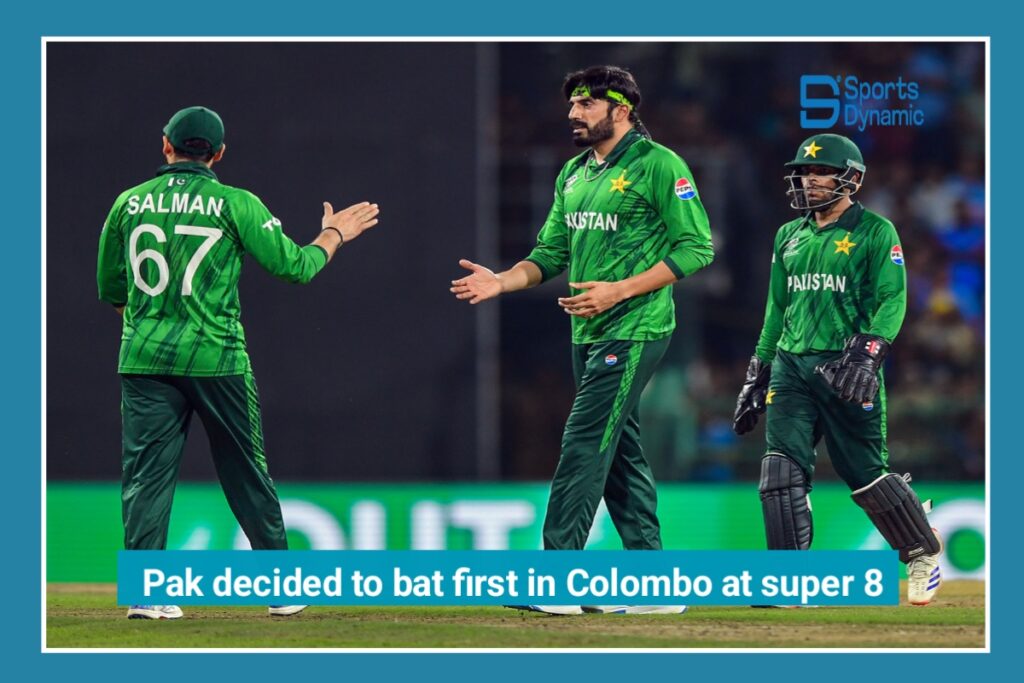
Overall, this decision shows that Pakistan are playing with belief. They are not looking to react to New Zealand — they want to dictate the game. Against a well-balanced side like New Zealand, who have quality bowlers and experienced finishers, taking the initiative can completely change the flow of the match. By choosing to bat first, Pakistan are sending a clear message: they’re ready to take responsibility and shape the contest on their own terms.
Context: Pakistan’s Road to the Super 8s
Pakistan’s road to the Super 8 stage hasn’t been smooth or easy. It’s been a proper roller-coaster ride. At the start of the tournament, things didn’t look completely settled. There were a few shaky moments, some pressure situations, and a lot of outside noise. But instead of falling apart, the team slowly pulled themselves together and fought hard to qualify from Group A.
In the group stage, Pakistan showed what they are capable of when everything clicks. They registered strong wins against the Netherlands and the United States of America. In those matches, their batting looked deep and confident, and their bowling attack showed good variety — pace, swing, and spin working together. It reminded everyone why Pakistan can be such a dangerous side in T20 cricket.
However, the big setback came against India. That loss hurt — not just because it was a defeat, but because of the magnitude of the rivalry and the expectations surrounding the match. Pakistan didn’t play their best cricket that day and were outperformed in key moments. But to their credit, they didn’t let that result break their spirit. Instead of panicking, the team management looked at what went wrong and made some smart adjustments. There were small tactical tweaks, better clarity in player roles, and a stronger focus on execution under pressure. It showed that this squad is willing to learn and adapt rather than repeat mistakes.
The real statement came in their final group match against Namibia. Pakistan completely dominated that game, winning by a massive 102 runs. It was a one-sided contest, and Sahibzada Farhan’s brilliant century in Colombo played a huge role in sealing their Super 8 qualification. That performance not only boosted their net run rate but also gave the entire team a surge of confidence at the perfect time.
This journey — with its ups and downs — may actually help Pakistan in the long run. Winning comfortably builds belief, but tough losses teach important lessons. Having experienced both pressure victories and painful defeats, the team now enters the Super 8 stage mentally stronger. At this level of the tournament, every match is crucial and even small mistakes can cost you dearly. Pakistan know that now more than ever.
There’s also a deeper emotional layer to this story. The earlier clash with India wasn’t just another game; it carried historical rivalry, massive fan attention, and even off-field tension. The spotlight was intense. Although Pakistan didn’t win that encounter, the way they bounced back to reach the Super 8s says a lot about their mental strength. It shows they can handle criticism, reset quickly, and focus on the bigger goal.
Now, even their decision to bat first in this Super 8 match feels connected to that mindset. It doesn’t look like a cautious or defensive move. Instead, it seems like a statement of intent. The leadership group appears determined to take control of games rather than react to what the opposition does. That positive and proactive approach could become the defining theme of Pakistan’s campaign as the tournament moves closer to the knockout rounds.
Weather and Pitch: Colombo’s Unpredictable Factor
One big uncertainty hanging over this match is the weather. Colombo is quite famous for sudden late-afternoon showers around this time of the year. The skies can look clear one moment and then suddenly turn grey. Because of that, there’s been real concern about rain interrupting the game. Weather forecasts have already hinted at heavy humidity and a strong chance of showers, and in T20 cricket, even a short delay can completely change the flow of the match.
Rain breaks can disturb momentum in a big way. A team that is batting well might suddenly lose rhythm after a long pause. Bowlers can also struggle to adjust once play resumes, especially if the ball gets wet due to dew or drizzle. And since Super 8 matches don’t always have a reserve day, a complete washout would mean both teams sharing points. That might not sound dramatic at first, but in a tight group where every point matters, it could seriously affect qualification scenarios later on.
Talking about the pitch at the R. Premadasa Stadium, it’s generally considered a balanced surface. Batters can play their shots freely, especially if they settle in early. But it’s not always completely straightforward. The bounce can be slightly uneven at times, and as the match goes on, spinners often come into play. So it’s not just about hitting big shots — it’s also about smart batting and reading the conditions well. Pakistan’s choice to bat first might be connected to this. They may want to make the most of the early overs when the pitch is fresh and easier to score on, before any rain, dew, or cooler evening conditions start affecting the surface.
Now coming to New Zealand — they are never an easy side to beat. No matter the format, they have a reputation for staying calm and playing smart cricket. They are led by experienced players who understand how to handle big tournaments. New Zealand have match-winners in both departments. With the bat, they have players who can suddenly change the game in just a few overs. With the ball, they are disciplined and stick to their plans.
Players like Glenn Phillips and Tim Seifert bring aggressive intent and experience at the top and in the middle order. They are capable of taking the game away quickly if they get going. On the bowling side, the Kiwis are known for picking up early wickets and putting pressure on the opposition from the start. Once they sense an opportunity, they rarely let it slip.
For Pakistan, this means they can’t afford to relax at any stage. They’ll need sharp fielding, tight bowling, and smart batting decisions. New Zealand are the kind of team that stays in the contest until the very end, and they often perform even better under pressure. If Pakistan want to come out on top, they’ll have to stay focused, adapt quickly to conditions, and execute their plans almost perfectly.
What Pakistan Must Deliver to Win
If Pakistan want to prove that their decision to bat first was the right one and walk away with a win, they’ll have to get a lot of small things right during the match.
First, they really need to make the most of the powerplay. The first six overs are extremely important in T20 cricket because only two fielders are allowed outside the circle. That’s the best time to play attacking shots and score quick runs. Pakistan’s openers should look to build a strong start without taking unnecessary risks. Even if they don’t go all-out aggressive, they must make sure the scoreboard keeps moving and the pressure stays on New Zealand from the beginning. A solid foundation early on can make a huge difference later in the innings.
After that comes the tricky middle overs. This is often where teams either lose momentum or build a platform for a big finish. Pakistan will need to rotate the strike smartly, take singles and doubles regularly, and avoid too many dot balls. They don’t have to hit a boundary every over, but they must keep the innings stable. Wickets in this phase can slow things down badly, so partnerships will be key. If two batters can settle in and play sensibly, it will help the team stay in control.
Then comes the most exciting part — the death overs. From the 15th over onwards, Pakistan must shift gears. This is the time to attack hard and turn good starts into big totals. If set batters are still at the crease, they need to take responsibility and go for boundaries. Finishing strong in the last five overs can push the total from average to match-winning. In close tournament games, those extra 15–20 runs at the end can decide everything.
But scoring runs is only half the job. If Pakistan put up a competitive total, they must defend it with discipline. Their bowlers have to stick to their plans, especially against New Zealand’s powerful middle order. Giving away easy boundaries or bowling too many loose deliveries could quickly shift the momentum. Tight lines, smart variations, and good control under pressure will be crucial.
Fielding will also play a massive role. In high-pressure matches, small moments matter — a dropped catch, a missed run-out, or a misfield can change the entire game. Pakistan need to stay sharp in the field and grab every half-chance that comes their way.
In simple terms, it’s about playing smart, balanced cricket. A good start, steady middle phase, explosive finish, and disciplined bowling effort — if Pakistan manage all of that, their decision to bat first could turn out to be a masterstroke.
The Road Ahead: Super 8 Stakes and Beyond
If Pakistan want to prove that their decision to bat first was the right one and walk away with a win, they’ll have to get a lot of small things right during the match.
First, they really need to make the most of the powerplay. The first six overs are extremely important in T20 cricket because only two fielders are allowed outside the circle. That’s the best time to play attacking shots and score quick runs. Pakistan’s openers should look to build a strong start without taking unnecessary risks. Even if they don’t go all-out aggressive, they must make sure the scoreboard keeps moving and the pressure stays on New Zealand from the beginning. A solid foundation early on can make a huge difference later in the innings.
After that comes the tricky middle overs. This is often where teams either lose momentum or build a platform for a big finish. Pakistan will need to rotate the strike smartly, take singles and doubles regularly, and avoid too many dot balls. They don’t have to hit a boundary every over, but they must keep the innings stable. Wickets in this phase can slow things down badly, so partnerships will be key. If two batters can settle in and play sensibly, it will help the team stay in control.
Then comes the most exciting part — the death overs. From the 15th over onwards, Pakistan must shift gears. This is the time to attack hard and turn good starts into big totals. If set batters are still at the crease, they need to take responsibility and go for boundaries. Finishing strong in the last five overs can push the total from average to match-winning. In close tournament games, those extra 15–20 runs at the end can decide everything.
But scoring runs is only half the job. If Pakistan put up a competitive total, they must defend it with discipline. Their bowlers have to stick to their plans, especially against New Zealand’s powerful middle order. Giving away easy boundaries or bowling too many loose deliveries could quickly shift the momentum. Tight lines, smart variations, and good control under pressure will be crucial.
Fielding will also play a massive role. In high-pressure matches, small moments matter — a dropped catch, a missed run-out, or a misfield can change the entire game. Pakistan need to stay sharp in the field and grab every half-chance that comes their way.
In simple terms, it’s about playing smart, balanced cricket. A good start, steady middle phase, explosive finish, and disciplined bowling effort — if Pakistan manage all of that, their decision to bat first could turn out to be a masterstroke.
Also Read This:
New Zealand vs Pakistan Super 8: How Mitchell Santner’s Return Could Change the Game
Match Officials Announced for Super 8 – ICC MEN’S T20 WORLD CUP 2026
FOLLOW FOR LATEST UPDATES