

Table of Contents
A Landmark Moment for Indian Sports
India’s sports industry has just hit a really big milestone, crossing the $2 billion mark, and that says a lot about how fast things are growing. It clearly shows that sports in India are no longer just about passion—they’ve become a serious business with huge commercial value, global attention, and strong investment potential.
But what really stands out in all of this is how dominant cricket still is. Out of the entire sports economy, cricket alone contributes around 89%, which is massive.
This tells us two things at the same time. On one hand, it highlights how deeply cricket is rooted in Indian culture—people love it, follow it, and spend on it like no other sport. On the other hand, it also raises an important question: what about the other sports? Are they growing fast enough to compete, or is cricket still way ahead of everyone else?
If you look at the bigger picture, crossing the $2 billion mark didn’t happen overnight. It’s the result of years of steady growth. Over the last decade, India has slowly started evolving from being just a cricket-focused country to a place where multiple sports are gaining attention.
Leagues are being created, athletes are getting recognition, and fans are showing interest in different games. Still, when you look at the numbers, cricket is clearly leading by a huge margin.
There are several reasons behind this rapid growth in the sports industry. Big broadcasting deals have played a major role, with companies paying huge amounts to secure rights for live matches.
Then there’s sponsorship and advertising, where brands are investing heavily to connect with sports audiences. Franchise-based leagues have also changed the game by making sports more entertaining and commercially viable.
On top of that, digital streaming platforms have made it easier for people to watch matches anytime, anywhere. And let’s not forget the role of athletes themselves—top players today are not just sports stars, they’re big brands. Their endorsements bring in massive money and add to the overall value of the industry.
Even with all these factors contributing to growth, cricket remains the biggest force. It alone drives almost 90% of the total sports economy, which clearly shows its unmatched popularity and financial power in India.
Cricket: The Undisputed King
Cricket has always been the biggest sport in India, so its dominance isn’t something new. But what’s really surprising now is the level of money involved—it has reached a scale that we’ve never seen before. And at the heart of all this growth is the Indian Premier League, or IPL, which is often called the richest cricket league in the world.
Ever since it started back in 2008, the IPL has completely changed how sports work in India. It’s not just about matches anymore—it’s full entertainment, business, and global branding all rolled into one.
The league has brought in massive money through media rights deals worth billions, big international sponsors, and an precious fan base that keeps growing every year. Today, IPL is not just a tournament, it’s a full-fledged business empire.
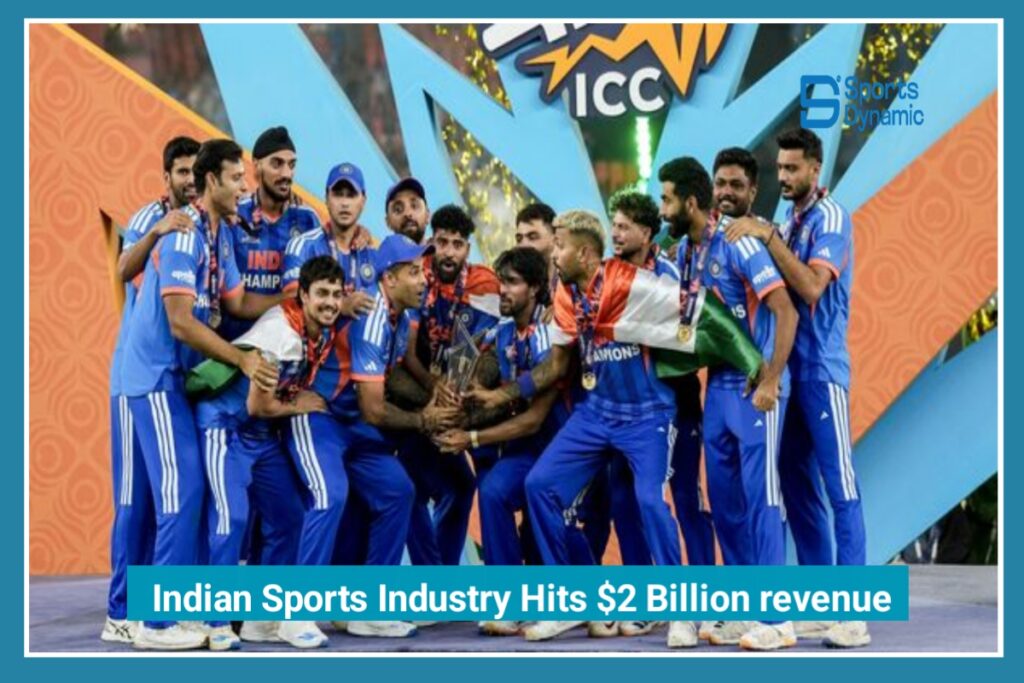
There are a few major reasons why cricket alone makes up such a huge 89% share of India’s sports economy. A big chunk comes from IPL itself—especially through broadcasting rights and sponsorship deals.
Then you have international matches where the Indian cricket team plays, which always attract huge viewership and revenue. Bilateral series and ICC tournaments also bring in a lot of money, as fans across the country follow them passionately.
On top of that, top cricketers are like celebrities. Their brand endorsements add another big layer of income to the sport. Whether it’s ads, promotions, or partnerships, these players bring in serious business.
Behind all of this, the BCCI (Board of Control for Cricket in India) plays a very important role. It’s the main body that manages cricket in the country and makes sure everything runs smoothly—from organizing matches to handling finances.
The way BCCI has built and managed cricket as a business is one of the biggest reasons why the sport is so far ahead of others in India today.
The IPL Effect: A Gamechanger of Indian Cricket
The IPL by itself plays a huge role in boosting India’s sports economy. It’s not just another cricket league anymore—it has become something much bigger on a global level. Teams are worth billions now, and players are earning record-breaking salaries, which shows how big the business side of the league has become. In many ways, IPL has set a standard that other sports leagues around the world try to follow.
There are a lot of reasons why IPL is so successful. For starters, the broadcasting rights deals are worth billions, with companies competing hard to stream the matches. Then there’s its global reach—people in more than 100 countries watch the IPL, which is a huge achievement for any league.
Big brands are also heavily involved, signing high-value sponsorship deals to be associated with the tournament. And of course, the excitement in the stadiums is on another level—matches are often sold out, and viewership records keep getting broken every season.
Because of IPL’s success, other sports in India also got inspired to launch their own leagues. For example, the Pro Kabaddi League brought kabaddi back into the spotlight, the Indian Super League helped football gain more popularity, and the Premier Badminton League gave badminton a professional platform.
These leagues have definitely grown and attracted fans, but if we talk about money and overall scale, they are still far behind cricket.
At the end of the day, IPL has not only changed cricket but has also influenced the entire sports ecosystem in India. Still, when it comes to financial power and popularity, cricket continues to stay way ahead of the rest.
Why Cricket Dominates So Heavily
There are quite a few simple reasons why cricket takes up such a huge share of the sports economy in India. First of all, it’s all about culture. Cricket is everywhere in India—you’ll see kids playing in streets, parks, and even small lanes, and at the same time, packed stadiums during big matches. It’s something people grow up watching and playing, so naturally, the connection is very strong across all age groups.
Then comes the star power. Cricketers in India are not just athletes, they’re proper celebrities. Players like Virat Kohli, Rohit Sharma, and Jasprit Bumrah have massive fan followings. Whatever they do—whether it’s playing, posting on social media, or appearing in ads—people pay attention. Because of this, brands are ready to spend huge money on endorsements, which adds a lot to the overall sports economy.
Another big reason is media rights. Cricket matches attract crazy viewership numbers, so broadcasters are always ready to pay big amounts to get the rights. Every time there’s a new deal, the numbers just keep getting bigger, which boosts the revenue even more.
Also, cricket doesn’t really have an off-season. There’s always something going on—bilateral series, ICC tournaments, or leagues like IPL. So fans are constantly engaged, and money keeps flowing throughout the year. That consistency is something most other sports still don’t have.
Now, if we look at other sports, things are improving, but they’re still not at the same level. Sports like football, kabaddi, badminton, and hockey are slowly becoming popular, but in terms of money, they’re still quite behind cricket.
For example, the Indian Super League has helped football get more attention, and the Pro Kabaddi League has made kabaddi exciting again, but financially, they are operating on a much smaller scale.
There are a few common challenges these sports face. Sponsorship deals are limited because brands prefer cricket for bigger visibility. TV viewership is also lower compared to cricket matches.
On top of that, proper grassroots infrastructure is still lacking in many areas, which makes it harder to develop talent. And since there are fewer big international wins, the hype around these sports doesn’t grow as quickly.
That said, things are slowly changing. Both the government and private companies have started putting in effort to support other sports. Programs like Khelo India, increased funding for Olympic sports, and grassroots development initiatives are helping build a stronger foundation. At the same time, companies are investing in different leagues, which is a positive sign.
Digital platforms are also playing a huge role now. Thanks to streaming apps and social media, it has become much easier for people to watch and follow different sports.
While cricket has benefited the most from this digital boom, other sports are also starting to use these platforms to reach new audiences. Short videos, live streaming, and content created by athletes themselves are helping fans connect with sports beyond cricket.
Overall, cricket is still far ahead, but slowly and steadily, other sports are finding their space and growing in their own way.
Future Outlook: Can Other Sports Catch Up?
The big question everyone is asking right now is pretty simple—can other sports in India ever catch up with cricket? Honestly, cricket is still going to stay on top for quite some time. Its popularity, fan base, and money power are just too strong at the moment. But at the same time, there are small but clear signs that things are slowly starting to change.
For example, a lot of young people in India are now showing more interest in football than before. You can see it in schools, local tournaments, and even on social media.
At the same time, India is doing really well in sports like badminton and wrestling at the international level, which is helping these sports gain more attention and respect. Kabaddi and athletics are also picking up pace, with more fans starting to follow them and support athletes.
Experts feel that if the right steps are taken—like consistent investment, better training facilities, strong grassroots programs, and more international success—then other sports can definitely grow their share in the future. It won’t happen overnight, but the progress is already visible.
If we look at the bigger picture, crossing the $2 billion mark is not just about money. It actually shows how much India’s sports industry has grown and how seriously it is now being taken as a proper business sector. But at the same time, the fact that cricket alone contributes around 89% also shows that there’s still a big imbalance.
Having a more balanced sports ecosystem would be a huge win for the country. It would create more opportunities for athletes in different fields and also help India become stronger on the global sports stage, not just in cricket but across multiple sports.
So yes, reaching this milestone is definitely something to feel proud about. It shows growth, progress, and potential. But it also reminds us that there’s still work to be done. Cricket, mainly driven by the IPL and managed by the BCCI, continues to dominate like no other sport in India.
However, if India truly wants to become a global sporting powerhouse, then other sports need to rise as well. It’s not just an option anymore—it’s actually necessary. The journey has already started, and while cricket is leading the way, the real and more exciting game is just beginning now.
Also, with the rise of school-level competitions, local leagues, and social media exposure, young athletes today have more opportunities than ever before to showcase their talent. If this momentum continues, we could soon see a more diverse sports culture in India where multiple sports share the spotlight, and not just cricket alone dominates the entire landscape.
Also Read This:
South Africa vs New Zealand: SA Win by 19 Runs in Crucial 4th T20
IPL 2026: KKR Shortlist 5 Pacers to Replace Harshit Rana
FOLLOW FOR LATEST UPDATES