
Table of Contents
Football’s Biggest Night Faces an Unexpected Challenge
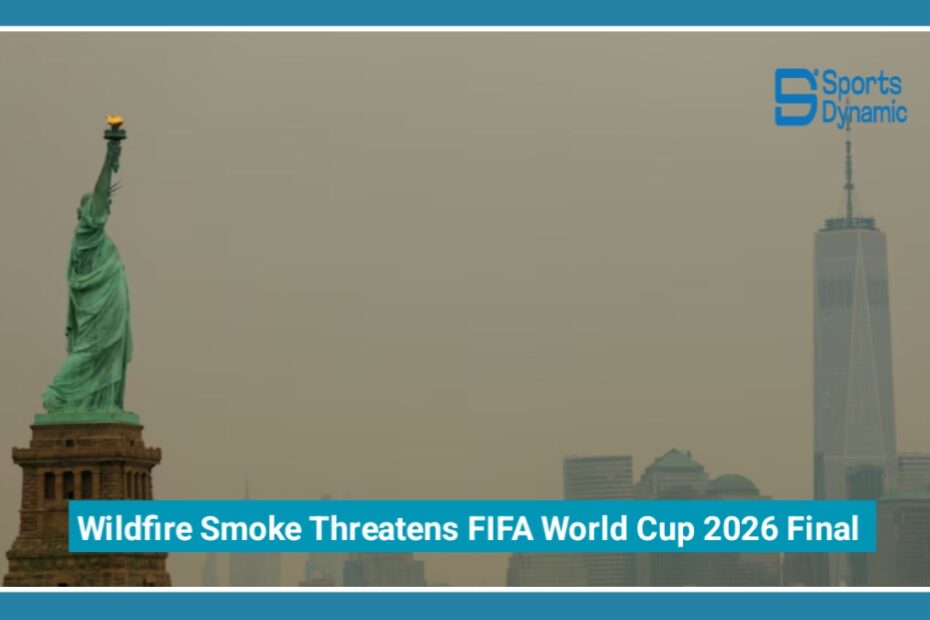
The FIFA World Cup Final is supposed to be all about football, passion, and unforgettable moments. But just days before the highly anticipated clash between Spain and Argentina at MetLife Stadium in New Jersey, a different issue has grabbed global attention — poor air quality caused by wildfire smoke drifting from Canada.
Millions of fans around the world are eagerly waiting for the final, yet discussions about tactics, star players, and predictions have been partly replaced by concerns about health and safety. Thick smoke covering parts of the northeastern United States has created a hazy atmosphere and raised questions about whether conditions will be suitable for players and spectators.
How Did Wildfire Smoke Reach New Jersey?
The problem began hundreds of miles away in Canada, where large wildfires have been burning across several regions. Strong winds carried smoke southward into major American cities, including New York and areas of New Jersey.
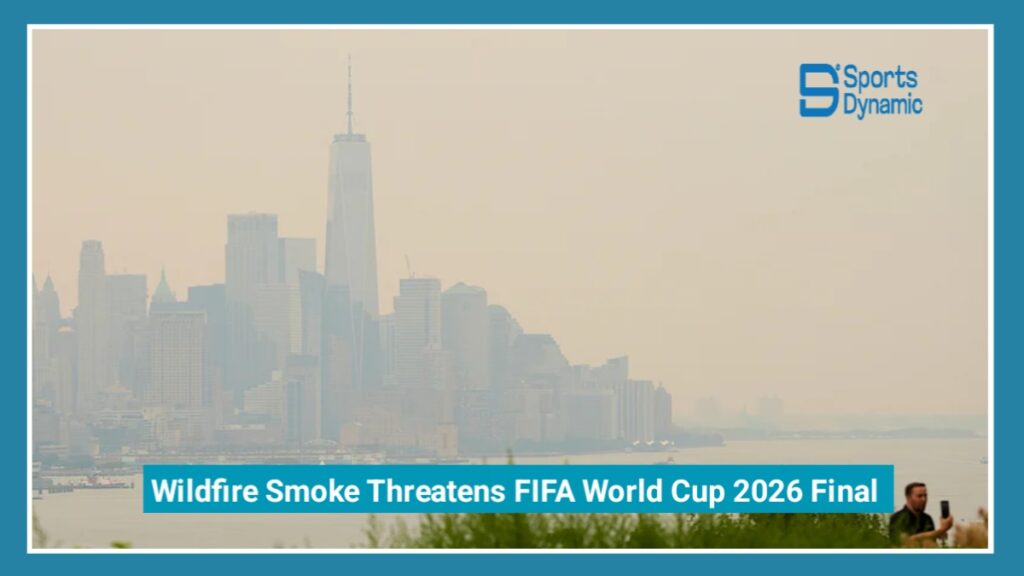
Residents have reported unusually hazy skies, reduced visibility, and a noticeable smell of smoke in the air. Environmental experts say that even though the fires are far away, the smoke can travel enormous distances and still affect air quality in heavily populated areas.
As a result, authorities issued air quality alerts and advised people to limit outdoor activities when pollution levels become too high.
Why Air Quality Matters in Professional Sports
For most people, spending a few hours outside in smoky conditions can be uncomfortable. For elite athletes, however, the situation can be much more serious.
Football players cover long distances during a match, constantly running, sprinting, and breathing heavily. When the air contains high levels of pollution and fine particles, it becomes harder for the body to perform efficiently.
Medical experts explain that polluted air can irritate the lungs, reduce oxygen intake, and increase fatigue. In extreme situations, it may even affect performance levels during high-intensity competition.
That is why sports scientists and health specialists are keeping a close eye on conditions leading up to the World Cup final.
Spain’s Preparation Affected by Smoky Conditions
Spain’s national team has already experienced the effects of the poor air quality during training sessions in New Jersey. Images from practice showed a visible haze hanging over the training ground.
While the team continued its preparations, the conditions sparked debate among health experts. Some questioned whether athletes should be training outdoors when air quality readings are considered unhealthy.
Players have not publicly complained about the situation, but coaching staff and medical teams are expected to monitor everyone closely before the match.
Any disruption to training in the days before a World Cup final can become a concern, especially when every small detail matters.
Argentina Faces a Different Situation
Argentina’s preparations have taken place in areas where air quality has been relatively better. This has naturally led to comparisons between the two finalists.
Although both teams will eventually play under the same conditions on match day, some observers believe Spain has had to deal with additional challenges during its final week of preparation.
Still, experienced players and coaches know that unexpected circumstances are part of international football. Both teams will be focused on adapting as quickly as possible and ensuring that environmental conditions do not become a distraction.
Could the Match Be Delayed?
One of the biggest questions being asked by fans is whether the World Cup final could be postponed if air quality worsens.
At the moment, FIFA has not suggested any delay or change to the schedule. Tournament organizers are continuing to monitor weather reports and environmental data while working closely with local authorities.
Current forecasts indicate that changing weather patterns and possible rainfall could help clear much of the smoke before kickoff. If those predictions prove accurate, conditions should improve significantly by match day.
However, weather can be unpredictable, and officials are prepared to react if necessary.
Fans Also Need to Be Careful
The concern is not limited to players. Tens of thousands of supporters are expected to attend the final in person, with many arriving from different countries around the world.
Health officials have advised fans to stay hydrated, limit unnecessary outdoor exposure before the game, and follow local air quality updates. People with asthma or other respiratory conditions have been encouraged to take extra precautions.
For many supporters, attending a World Cup final is a once-in-a-lifetime experience. Organizers want to ensure that fans can enjoy the occasion safely.
A Reminder of a Bigger Global Issue
The air quality concerns surrounding the World Cup final highlight a much larger issue. Climate experts point out that extreme wildfire seasons are becoming more common in several parts of the world.
In recent years, smoke from major wildfires has affected cities located hundreds or even thousands of kilometers away from the actual fires. Events that once seemed unrelated to environmental issues are now increasingly being influenced by them.
The situation in New Jersey serves as another example of how climate-related events can impact international sports, travel, and public gatherings.
The Focus Returns to Football
Despite all the discussion surrounding air quality, excitement for the final remains incredibly high. Spain and Argentina have both produced impressive performances throughout the tournament and fully deserve their place in football’s biggest match.
Fans are expecting a thrilling contest between two talented teams with rich football histories. The atmosphere inside MetLife Stadium is expected to be electric, and millions will be watching from homes, bars, and public viewing areas around the world.
Everyone involved will be hoping that the smoke clears, the weather cooperates, and the final is remembered for brilliant football rather than environmental concerns.
As the countdown to the FIFA World Cup 2026 Final continues, organizers, players, and fans are keeping one eye on the match and another on the skies above New Jersey. Wildfire smoke has created an unusual challenge, but preparations for the biggest game in world football continue.
If weather forecasts are correct, conditions should improve before kickoff. Until then, the story of Spain versus Argentina is not just about goals, tactics, and trophies. It is also about how global events can sometimes be affected by forces far beyond the football pitch.
Also Read This:
Shubman Gill Reveals Why India Lost 2nd ODI as England Level Series in Cardiff
India vs England 2nd ODI: Middle-Order Collapse Restricts India to 233 in Cardiff
FOLLOW FOR LATEST UPDATES