
Table of Contents
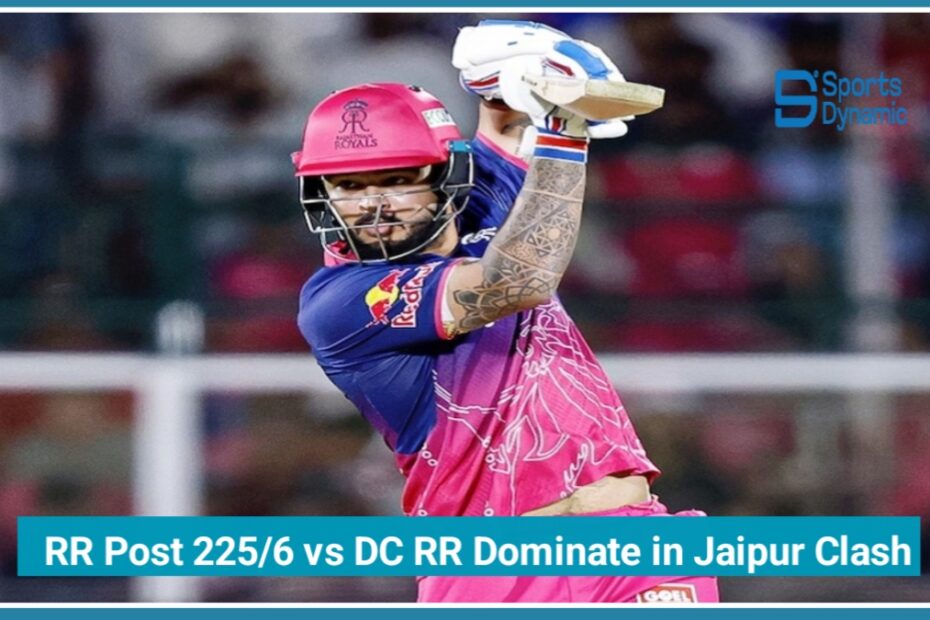
The IPL 2026 match between Rajasthan Royals (RR) and Delhi Capitals (DC) at the Sawai Mansingh Stadium in Jaipur turned out to be a proper high-energy T20 game that fans love watching. RR ended up putting a huge total on the board, scoring 225/6 in 20 overs, which immediately put DC under a lot of pressure even before they came out to bat.
From the very start, the RR batters looked in good touch. They weren’t just trying to survive or play safe—they came out with a clear attacking mindset. Every over had something happening: boundaries, quick singles, and smart running between the wickets. It felt like the team had already decided they were going to go big in this innings, and they stuck to that plan pretty well.
What really stood out was how Rajasthan Royals balanced aggression with smart cricket. It wasn’t just wild hitting; there was also a lot of intelligent strike rotation. When boundaries weren’t coming, they kept the scoreboard moving, which made sure the pressure stayed on the DC bowlers throughout the innings. Even when wickets fell at certain stages, RR didn’t panic and kept pushing forward.
The middle overs were especially important. Instead of slowing down like many teams do, RR kept the momentum going. The batters built partnerships and made sure that no phase of the game went quiet for too long. Delhi Capitals tried different bowling options, but nothing really worked consistently for them.
By the time the death overs came, RR had already built a strong base. From there, it was just about finishing big—and they did exactly that. The last few overs saw some powerful hitting, with the ball regularly flying to the boundary and beyond. That finishing burst made a huge difference and took RR past the 225 mark, which is a very strong total in any T20 game.
For Delhi Capitals, this was not an easy situation. A target of 226 is always tough, especially in a high-pressure stadium like Jaipur where the crowd energy also plays a big role. Their bowlers had moments where they looked decent, but overall, they couldn’t really control the flow of runs. A few loose overs here and there ended up costing them heavily.
Another key thing in this match was how RR batters handled pressure situations. Even when DC tried to slow things down with spin or change of pace, RR found ways to keep scoring. Whether it was picking gaps or hitting clean boundaries, they always had an answer.
Players like Riyan Parag and others in the lineup really stepped up and made sure the innings didn’t lose direction. Parag in particular looked confident and composed, mixing aggressive shots with sensible cricket. That kind of balance is exactly what teams need in big matches like this.
From a match perspective, 225/6 is not just a good score—it’s a statement. It tells the opposition that they now have to play almost perfect cricket to chase it down. One or two early wickets in the second innings can completely change the game from here.
The pitch in Jaipur also looked like a good batting surface, but still, chasing 225 is never simple. There might be some help for bowlers later, especially under pressure. If RR bowlers can strike early, they will feel very confident going into the rest of the match.
Overall, this RR vs DC clash has already given fans a lot to talk about. High score, aggressive batting, and nonstop action—that’s exactly what IPL is known for. Now all eyes are on Delhi Capitals and how they respond to this big challenge.
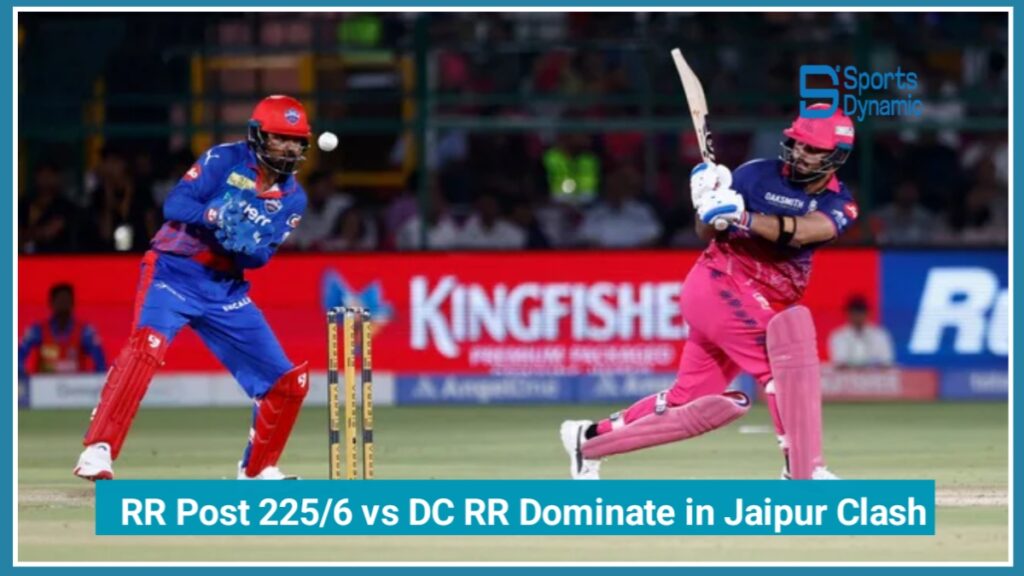
It’s one of those matches where momentum matters a lot, and Rajasthan Royals clearly have the upper hand after the first innings. Whether DC can pull off something special or RR completes a strong win—that’s what makes this game exciting going into the second half.
Rajasthan Royals’ Dominant Batting Show
Rajasthan Royals came into this match with a very clear plan in mind—they wanted to attack right from the beginning and make full use of the powerplay. And honestly, they carried out that plan really well.
From the first few overs itself, you could see the intent. The opening batters didn’t look like they were going to settle down slowly. Instead, they started playing shots early, putting pressure on the Delhi Capitals bowlers right away. The new ball was being attacked with confidence, whether it was pace or spin—RR batters were ready for everything.
The opening partnership played a big role in setting the tone for the innings. Both batters showed fearless intent, which helped Rajasthan get a strong start without losing too many wickets early on. This kind of start is exactly what teams look for in T20 cricket, especially when they are aiming for a big total.
What was really impressive was that RR didn’t let the run rate drop at any point. Even when DC tried to tighten things up a bit, the batters kept finding ways to score. Sometimes it was clean boundaries, sometimes quick singles, but the scoreboard was always moving.
As the innings went into the middle overs, Rajasthan Royals didn’t change their approach much, which actually worked in their favor. A lot of teams slow down in this phase, but RR kept the pressure on. They kept rotating strike smartly and didn’t allow the bowlers to settle into a rhythm.
Whenever DC bowlers tried something different—like slower balls, spin changes, or defensive fields—RR batters responded calmly and kept finding gaps. That constant pressure made it really hard for Delhi to control the game.
The middle order also played a very important role here. Once the set batters got out or were trying to build again, the middle order came in and didn’t waste time. They immediately picked up the pace, punished any loose deliveries, and made sure the momentum stayed with RR.
A few batters really stood out because they took responsibility at the right time. Instead of just trying to survive or rotate strike, they converted their starts into proper impactful innings. That’s what pushed RR towards such a strong total in the end.
Key Batting Highlights
Riyan Parag once again showed why he is slowly becoming such an important player for Rajasthan Royals. In this match, he played a really solid and aggressive knock of 91 runs off just 50 balls, and honestly, it was one of those innings that completely shaped RR’s total.
At the start, Parag didn’t look rushed at all. He took his time to settle in, but once he got his eye in, he started playing with full confidence. What stood out most was how smartly he mixed aggression with control. He wasn’t just swinging blindly—he picked the right balls to attack and made sure the pressure stayed on the bowlers.
Especially in the middle overs, when spin came into play, Parag looked really comfortable. Instead of just defending, he used his feet, found gaps, and also played some really clean shots over the infield. That’s what made his innings so valuable—not just the runs, but the timing of those runs.
On the other end, Dhruv Jurel played a very important supporting role. His 42 off 30 balls might not look as flashy as Parag’s knock, but it was just as important for the team. He held one end steady and made sure RR didn’t lose momentum after a couple of early wickets.
Jurel’s batting was all about smart cricket. He rotated the strike well, didn’t take unnecessary risks, and picked up boundaries whenever the bowlers gave him even a small mistake. In pressure moments, that kind of calm approach really helps the team stay on track.
Together, Parag and Jurel built a strong partnership that kept Rajasthan Royals in control of the game. They didn’t allow the innings to slow down, and more importantly, they didn’t let DC come back into the match easily.
Then came the final phase—the death overs. This is where RR really shifted gears. Once the set batters were in, the team went all out attacking. The hitting became more aggressive, the intent became very clear, and runs started coming quickly from almost every over.
In those last few overs, RR managed to collect a big chunk of runs, which pushed them past the 225-run mark. That finishing burst made a huge difference because it turned a good total into a really strong and almost intimidating one for the opposition.
By the end of the innings, Rajasthan Royals were in a very commanding position, thanks to Parag’s brilliant anchor role, Jurel’s steady support, and a powerful finish that gave them complete control of the match.
Delhi Capitals Bowling Struggles
Delhi Capitals’ bowling unit had a pretty tough time trying to stop Rajasthan Royals in this match. From the very beginning, RR batters were playing with a lot of confidence and intent, and DC bowlers just couldn’t really find a consistent way to control them.
There were a few moments in the middle overs where Delhi looked slightly better and tried to slow things down. For a short phase, it felt like they might pull things back a bit. But the problem was they couldn’t maintain that pressure for long. As soon as RR batters got comfortable again, the runs started flowing.
The biggest issue for DC came in the death overs. That’s where things really got out of hand. Rajasthan Royals went into full attacking mode, and the bowlers just didn’t have many answers. Every over in the final phase was expensive, and the scoreboard kept moving very quickly in RR’s favour.
Natarajan was probably the most noticeable bowler for Delhi Capitals. He managed to pick up a wicket, which was a positive moment for his side, but overall he also ended up giving away quite a few runs. The reason was simple—RR batters attacked him hard in the later overs and didn’t let him settle into any rhythm.
Another big concern for DC was the lack of consistent wicket-taking options. They couldn’t really break partnerships at regular intervals, and because of that, RR batters got enough time in the middle to settle down properly and then accelerate later on. In T20 cricket, if set batters stay at the crease for too long, things usually get difficult—and that’s exactly what happened here.
The spinners from Delhi also didn’t have a great outing. Instead of building pressure, they were often taken on by RR batters. Rajasthan played spin quite smartly—they used their feet, adjusted their position on the crease, and timed the ball really well. So even when the bowlers tried to slow things down, RR didn’t just go for blind hitting; they played calculated shots and kept the scoreboard moving.
If you look at the match overall, there were a few clear turning points that really shaped this big total.
First was the powerplay, where RR started aggressively and didn’t lose early wickets. That gave them instant momentum and set the tone for the entire innings.
Then came the middle overs, where players like Parag and Jurel took control. They didn’t allow the innings to slow down, and instead of just defending, they built partnerships and slowly increased the scoring rate again.
What 225 Means for Delhi Capitals
Chasing 226 runs in Jaipur is honestly a very tough task in any T20 match. It’s the kind of target where you can’t afford to start slowly or make too many mistakes. From the very first over itself, the batting side has to be in attack mode because the required run rate is already very high.
In most cases at the Sawai Mansingh Stadium, teams batting second also feel a bit of extra pressure. As the innings goes on, the pitch can slow down a little, and that makes stroke play slightly harder. On top of that, there’s always scoreboard pressure—once wickets start falling, the chase can quickly get out of control.
For Delhi Capitals, the plan will have to be very clear and simple. They will need a strong start in the powerplay, ideally around 60 or more runs in the first six overs, without losing too many wickets. That kind of beginning is almost necessary if they want to stay in the game.
After that, the top-order batters will have to build proper partnerships. In a chase like this, one batter staying till the end can make a huge difference, but for that to happen, the team needs some stability early on. If they keep losing wickets regularly, the pressure will just keep building.
Another very important thing will be reducing dot balls. In big chases, even a few quiet overs can completely change the momentum. So DC batters will need to keep rotating strike and make sure the scoreboard keeps moving, even when boundaries are not coming easily.
The middle overs will be very crucial too. This is usually where games like this are won or lost. Delhi will need a calm but smart approach here—not too defensive, but also not reckless. Picking the right bowlers to attack and keeping the chase under control will be key.
If DC loses early wickets, though, things can get really difficult very quickly. A couple of quick dismissals can put them under massive pressure and force the lower order to take unnecessary risks.
Talking about the pitch conditions in Jaipur, the Sawai Mansingh Stadium has generally been a good surface for batting. The ball comes nicely onto the bat in the early overs, which allows batters to play their shots freely. But at the same time, spinners do get a bit of help in the middle overs, especially when the pitch starts to slow down.
Once a batter gets set, though, this pitch still allows scoring. That means if someone from Delhi Capitals can stay at the crease for a long time, they can definitely make a big impact in the chase.
There is also a chance that dew could come into play during the second innings. If that happens, it might become slightly easier to bat because the ball will come onto the bat better and spinners might find it harder to grip. But still, even with dew, chasing 225+ is never easy—you need a near-perfect batting performance.
Key Players to Watch in DC Chase
Delhi Capitals’ batting plan will depend a lot on their top-order performance. Their main job will be to give the team a solid start and not lose early wickets. In a big chase like this, if the top order clicks even a little bit, it gives confidence to the rest of the batting lineup.
After that, the middle order will have a very important role. Once the platform is set, the finishers will need to step in and really push the scoring rate. They can’t afford to take too long to settle because the required run rate is already very high. So, they’ll have to balance aggression with smart shot selection.
Another key factor for DC will be strike rotation. It might sound simple, but in a pressure chase like this, it becomes very important. If batters keep taking singles and doubles regularly, it reduces pressure and keeps the scoreboard moving. But if they get stuck and play too many dot balls, the required rate will keep climbing and things will get tougher.
On the other hand, if Delhi Capitals lose early wickets, the situation can quickly slip out of their hands. Once that happens, Rajasthan Royals’ bowlers will feel much more confident and will be able to control the game properly. In T20 cricket, early breakthroughs often decide the direction of the match.
Looking at Rajasthan Royals, their biggest advantage right now is the psychological pressure they’ve created. When a team posts a total like 225, it automatically puts pressure on the chasing side. Batters know they have to take risks from the beginning, and that often leads to mistakes.
RR will try to use this pressure smartly. Their bowling plan will likely focus on picking up early wickets and not letting DC settle at all. If they can get one or two quick breakthroughs in the powerplay, it will completely tilt the game in their favour.
Also Read This:
RR vs DC Live Score IPL 2026: Riyan Parag Rescues Rajasthan Royals After Early Collapse
GT vs RCB IPL 2026: Shubman Gill Admits Luck Played Key Role
FOLLOW FOR LATEST UPDATES