
Table of Contents
India vs England: England Win Toss and Choose to Bowl
The semi-final match of the ICC Men’s T20 World Cup 2026 between India and England at the famous Wankhede Stadium in Mumbai turned into an exciting and high-scoring battle right from the start. Cricket fans were expecting a close contest between two strong teams, and the game quickly lived up to that expectation. England captain Harry Brook won the toss and decided to bowl first.
His plan was to take advantage of the early conditions and try to put pressure on the Indian batters by taking early wickets. England also believed that chasing later in the evening under the lights might be easier on a batting-friendly pitch.
However, things didn’t go exactly according to England’s plan. India’s powerful batting lineup came out with an aggressive approach and completely changed the momentum of the game. The Indian top order and middle order attacked the English bowlers from the beginning and kept the scoreboard moving quickly.
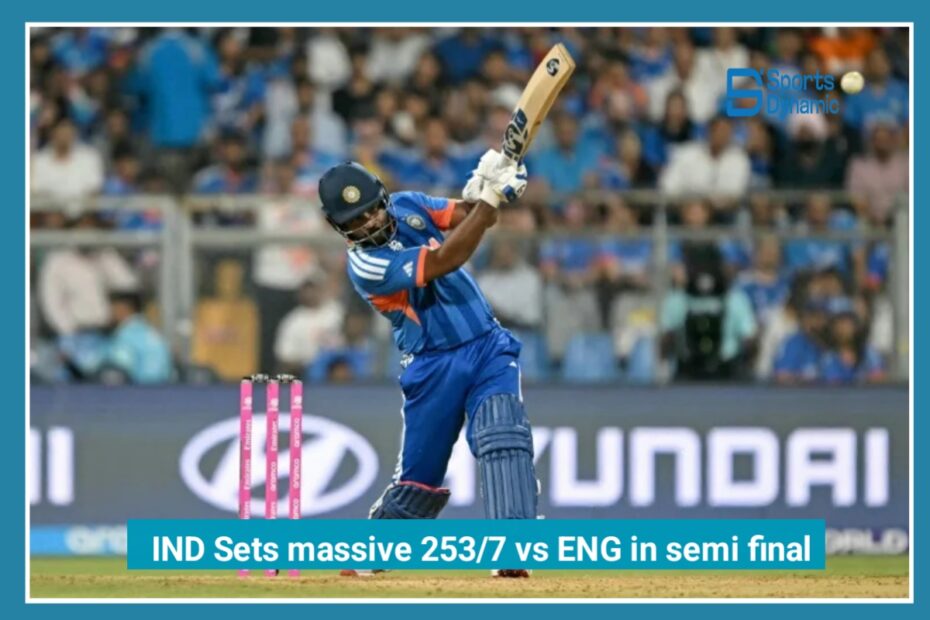
By the end of the innings, India had posted a massive total of 253 runs for the loss of 7 wickets in 20 overs, which is considered a huge score in T20 cricket. With this performance, India set England a very challenging target of 254 runs if they wanted to secure a place in the final.
This semi-final match carried huge importance because the winning team would move one step closer to lifting the trophy. The winner of this clash will face New Zealand in the final of the tournament.
Over the past few years, India and England have developed a strong rivalry in T20 World Cups, and matches between these two sides are always intense and entertaining. Once again, this game delivered everything fans hoped for — big hits, dramatic moments, and high-quality cricket.
At the toss, Harry Brook explained that his decision to bowl first was based on the conditions of the pitch. The surface at Wankhede Stadium is known for helping batters, especially later in the match.
England believed that if they could control India’s batting early on, chasing a target later in the evening would give them an advantage. Teams often prefer chasing in T20 cricket because dew and better batting conditions can make it slightly easier for the second team.
Brook also admitted that India had more experience playing at the Wankhede Stadium, especially because many Indian players are familiar with the conditions there. Still, he remained confident that England’s bowling attack had the ability to restrict India if they executed their plans properly and maintained pressure in the early overs.
On the other hand, Indian captain Suryakumar Yadav appeared calm and confident after losing the toss. He said that the team was mentally prepared to bat first if needed, so the toss result did not bother them much.
According to him, India’s main focus was simply to play positive cricket and put up a strong total on the board. His confidence was clearly reflected in the way the Indian batters approached their innings.
Before the match started, the pitch report suggested that the surface would be very good for batting. Experts believed that the pitch had good bounce and pace, which usually helps batters play their shots freely. Historically, the Wankhede Stadium in Mumbai has seen many high-scoring T20 matches because the boundaries are not very large and the pitch supports aggressive batting.
As the match progressed, that prediction proved to be completely accurate. The Indian batters took full advantage of the conditions and played attacking cricket throughout the innings. Boundaries and sixes came regularly, and England’s bowlers struggled to find a way to slow down the scoring rate.
What was expected to be a balanced semi-final quickly turned into a batting spectacle, with India dominating the first innings and putting themselves in a strong position in this crucial World Cup knockout match. The stage was now set for England to attempt a massive run chase if they wanted to keep their hopes of reaching the final alive.
Explosive Start from India
India started their innings in a very aggressive manner as openers Abhishek Sharma and Sanju Samson came out to bat in front of a loud and energetic crowd at the Wankhede Stadium. The atmosphere in the stadium was electric, with thousands of fans cheering for the Indian team right from the first ball. Both batters looked confident and ready to attack, but it was Sanju Samson who really set the tone early in the innings.
Samson did not take much time to settle at the crease. From the beginning, he started playing attacking shots and put pressure on the England bowlers. He used the pace of the ball well and hit some powerful boundaries and big shots all around the ground. His aggressive approach helped India get off to a quick start and gave the team early momentum.
Abhishek Sharma also tried to play his usual fearless style of cricket. He looked positive and attempted a few attacking strokes, but unfortunately he couldn’t stay at the crease for long. Just when it seemed like he might build a good partnership with Samson, he lost his wicket early and had to walk back to the pavilion. His dismissal gave England a small moment of relief.
However, that early wicket did not slow down India’s approach at all. The team continued to play attacking cricket and kept the pressure on the English bowlers. After Abhishek’s dismissal, Ishan Kishan came in to bat and immediately carried forward the momentum.
Kishan played a short but very impactful innings. He looked confident and didn’t hesitate to take on the bowlers. With some quick boundaries and clever shots, he added valuable runs in a short time. His cameo ensured that India’s scoring rate stayed very high, especially during the powerplay overs.
During the first six overs, India kept scoring at a rapid pace, maintaining a run rate of more than 10 runs per over. That kind of scoring rate in the powerplay gave India a very strong platform for the rest of the innings.
Within just a few overs, it became quite clear that England’s bowlers were finding it difficult to control the game. The pitch at Wankhede was very good for batting, offering true bounce and allowing the batters to play their shots freely. Because of these conditions and the attacking intent of the Indian batters, the ball kept racing to the boundary again and again.
As the innings progressed, India looked completely in control, while England struggled to slow down the flow of runs on what appeared to be a very flat and batting-friendly surface.
Sanju Samson’s Blistering Knock
India started their innings in a very aggressive manner as openers Abhishek Sharma and Sanju Samson came out to bat in front of a loud and energetic crowd at the Wankhede Stadium. The atmosphere in the stadium was electric, with thousands of fans cheering for the Indian team right from the first ball. Both batters looked confident and ready to attack, but it was Sanju Samson who really set the tone early in the innings.
Samson did not take much time to settle at the crease. From the beginning, he started playing attacking shots and put pressure on the England bowlers. He used the pace of the ball well and hit some powerful boundaries and big shots all around the ground. His aggressive approach helped India get off to a quick start and gave the team early momentum.
Abhishek Sharma also tried to play his usual fearless style of cricket. He looked positive and attempted a few attacking strokes, but unfortunately he couldn’t stay at the crease for long. Just when it seemed like he might build a good partnership with Samson, he lost his wicket early and had to walk back to the pavilion. His dismissal gave England a small moment of relief.
However, that early wicket did not slow down India’s approach at all. The team continued to play attacking cricket and kept the pressure on the English bowlers. After Abhishek’s dismissal, Ishan Kishan came in to bat and immediately carried forward the momentum.
Kishan played a short but very impactful innings. He looked confident and didn’t hesitate to take on the bowlers. With some quick boundaries and clever shots, he added valuable runs in a short time. His cameo ensured that India’s scoring rate stayed very high, especially during the powerplay overs.
During the first six overs, India kept scoring at a rapid pace, maintaining a run rate of more than 10 runs per over. That kind of scoring rate in the powerplay gave India a very strong platform for the rest of the innings.
Within just a few overs, it became quite clear that England’s bowlers were finding it difficult to control the game. The pitch at Wankhede was very good for batting, offering true bounce and allowing the batters to play their shots freely. Because of these conditions and the attacking intent of the Indian batters, the ball kept racing to the boundary again and again.
As the innings progressed, India looked completely in control, while England struggled to slow down the flow of runs on what appeared to be a very flat and batting-friendly surface.
England Bowlers Struggle for Control
England’s bowlers really had a tough time trying to control India’s aggressive and attacking batting lineup. From the very beginning, it was clear that nothing came easily for them. Fast bowlers like Jofra Archer and Sam Curran went for a lot of runs, especially in the powerplay and middle overs, as the Indian batters made it a point to target them from the first ball. Every short ball, every wide delivery seemed to be punished, and the runs kept flowing at a fast rate.
Even England’s experienced leg-spinner Adil Rashid tried hard to create some pressure by mixing up his pace and flight, and he did manage to take a couple of wickets. But the Indian batters were in such great form that even his best deliveries couldn’t stop the onslaught. The scoring continued at a relentless pace, and it was difficult for any bowler to get a break or control the momentum.
Fielding lapses made things worse for England. Perhaps the most crucial moment was when they dropped Sanju Samson early in his innings. That one mistake proved very costly, as Samson went on to play an explosive knock that completely changed the game. That dropped catch allowed him to settle in, accelerate, and play a match-defining innings that put India in a dominant position.
Overall, England’s bowlers were fighting a losing battle on a pitch that offered very little help. The surface was true and flat, making it easier for the Indian batters to play their shots freely. On a day like this, even experienced bowlers struggled to keep the scoring under control, and India took full advantage, piling up a massive total that England will now have to chase under pressure.
A Massive Chase Awaits England
Now, with 254 runs needed to win, England is facing one of the toughest chases in the history of T20 World Cup cricket. It’s not going to be easy for them at all. To pull off a victory and secure a place in the final, England’s star-studded batting lineup — including Jos Buttler, Philip Salt, and captain Harry Brook — will have to put together an extraordinary performance. Every run will count, and there is no room for mistakes.
The Wankhede Stadium has a reputation for high-scoring matches, and we’ve already seen how flat and batting-friendly the pitch is. But chasing a total as massive as 254 in a high-pressure World Cup semi-final will be a real test of England’s skill, composure, and strategy. They cannot afford to lose early wickets, or the chase could quickly spiral out of control.
On the other side, India’s bowling attack looks well-prepared to defend this huge total. Jasprit Bumrah, Arshdeep Singh, and Varun Chakaravarthy will lead the attack and try to strike early. Their aim is clear: put pressure on England’s top order right from the start, force mistakes, and control the game. If India can take early wickets, it will make England’s chase incredibly difficult.
This semi-final is particularly special because it marks the third consecutive T20 World Cup where India and England are facing each other at this stage. Interestingly, in the previous two editions, the team that won this semi-final went on to lift the trophy. That historical pattern adds even more excitement and intensity to today’s clash.
If England manages to chase down this massive target, it would go down as one of the greatest run chases in T20 history. On the other hand, if India’s bowlers succeed in defending the total, it will reinforce India’s dominance and take them straight to the final against New Zealand.
As the second innings gets underway, all eyes are on England’s batters. The pressure is firmly on them, and every delivery could be crucial. The Mumbai crowd is fully behind India, and the energy in the stadium will make every wicket celebration thunderous and loud.
England’s strategy will likely be to start aggressively, keep the required run rate in check, and avoid losing wickets in the early overs. Meanwhile, India will look to strike early and create pressure so that the chase becomes impossible.
No matter what happens, this semi-final has already provided one of the most spectacular batting displays of the T20 World Cup 2026. And with such a massive target and high stakes, the drama is far from over — fans can expect an edge-of-the-seat thriller as England attempts this colossal chase.
Also Read This:
Finn Allen Creates History with Fastest Century in T20 World Cup Semi-Final vs South Africa
FOLLOW FOR LATEST UPDATES