
Table of Contents
T20 World Cup 2026: India Fine‑Tunes Team, Defending Champions, New Challenges
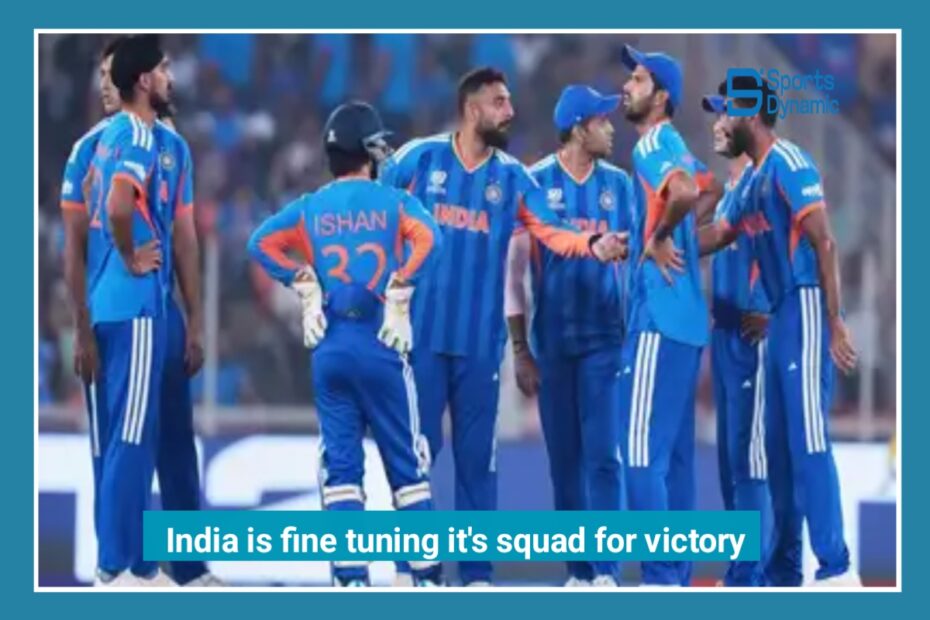
As the ICC Men’s T20 World Cup 2026 heads into its final stages, Team India finds itself at a pivotal moment in its campaign. The squad is working hard to strike the perfect balance between explosive, high-octane cricket and steady, tactical play, with the ultimate goal of defending their title on home soil.
This edition, co-hosted by India and Sri Lanka, has tested even the most experienced teams, pushing players to their limits, and TeamIndia’s journey so far has come to reflect resilience, adaptability, and an ever-increasing intensity on the field.
Coming into the tournament as the defending champions — having clinched the trophy in Barbados in 2024 — expectations were sky-high. Under the dynamic leadership of Suryakumar Yadav, the Indian squad was thoughtfully structured to combine hard-hitting batting with disciplined bowling, ensuring both firepower and control.
Even before the tournament kicked off, the management made bold moves to shape the team strategically. One of the biggest talking points was the exclusion of Shubman Gill, a dependable white-ball performer, from the 15-player squad — a decision that sparked heated debates among fans, analysts, and cricket pundits alike.
In place of Gill, the team India brought in Ishan Kishan, Axar Patel, and a mix of young, explosive talents alongside experienced campaigners, signaling a clear intent: India wanted a flexible, adaptable squad capable of thriving in the varying conditions across India and Sri Lanka.
Ups and Downs: South Africa Shock and India’s Fierce Response
India started the Super Eights stage with a sense of optimism, but reality hit hard in their first match. In Ahmedabad, South Africa turned in a devastating performance, defeating India by 76 runs and bringing an end to India’s remarkable 12-match winning streak in T20 World Cup history.
The loss was a blunt reminder that in the fast-paced T20 World Cup 2026 format, momentum can change in an instant. Early batting collapses and a lack of tempo during the chase raised questions about India’s top-order stability and the approach they adopt in high-pressure games.
Yet, what happened next highlighted the team’s mental strength. Far from letting that defeat define them, India bounced back with one of the most emphatic displays in recent World Cup memory, showing that they were determined to adapt, learn, and strike back harder than before.
Dominant Win Against Zimbabwe: A Statement of Intent
In their second Super Eights match against Zimbabwe in Chennai, Team India put on an absolute show at the MA Chidambaram Stadium. Opting to bat first, the Indian side piled up a staggering 256 for 4, marking the highest total of this year’s T20 World Cup so far. The innings was powered by explosive half-centuries from Abhishek Sharma and Hardik Pandya, who really set the tone for a high-octane batting display.
Team India struck 17 sixes and 17 fours, showcasing a perfectly balanced batting lineup where every player, from the openers to the finishers, contributed meaningfully. Players like Ishan Kishan, Suryakumar Yadav, Tilak Varma, and Pandya combined brilliantly to produce a batting blitz that was a sharp turnaround from their subdued performance against South Africa earlier in the tournament.
When it was India’s turn with the ball, they maintained the pressure, making sure Zimbabwe never looked like threatening the target. Restricting them to 184 for 6, India sealed a comfortable 72-run win — a result that not only kept their hopes of reaching the semi-finals alive but also gave the team a much-needed confidence boost as they continue their title defence.

Off the field, captain Suryakumar Yadav kept his composure, sending a clear message: Team India must stay true to their aggressive and fearless brand of cricket. Following the match, young batter Tilak Varma echoed this sentiment, saying the team would keep playing with intent, focus, and intensity in all the important games ahead.
Even cricket legend Sachin Tendulkar praised the side, applauding India’s temperament in handling must-win situations and hailing their batting assault as a perfect example of belief, resilience, and character under pressure.
Strategic Adjustments and Team Fine‑Tuning
The way Team India bounced back from their setback against South Africa to deliver such a commanding performance against Zimbabwe really shows how the team is evolving strategically. The coaching staff, with batting coach Sitanshu Kotak at the helm, emphasized the importance of staying calm under pressure and focusing on simple, positive cricket in the crucial overs.
They spent time working with the players on how to respond in high-pressure moments, aiming to avoid early collapses while still encouraging calculated aggression when the situation called for it.
Veteran advisors like Ravi Shastri and Ricky Ponting also played a key role, offering insights on the best possible playing combinations and encouraging the team to rethink their XI and overall tactics after the first loss. That kind of reassessment and minor shake-up, the experts believe, could be vital in keeping the team’s momentum going.
The squad itself reflects a careful balance of youth and experience. Players like Hardik Pandya and Jasprit Bumrah provide both all-round skills and dependable bowling control, while explosive batters such as Abhishek Sharma and Tilak Varma bring raw power and match-winning intent to the lineup.
With this mix, India seems well-prepared to tweak their batting order and game plans depending on the opposition and pitch conditions, making them a flexible and dangerous side as the tournament progresses.
What Lies Ahead: West Indies Showdown
After bouncing back so convincingly against Zimbabwe, Team India now faces a crucial and potentially tournament-defining clash against the West Indies in Kolkata. This match has taken on the feel of a virtual quarter-final, with the winner almost certainly booking a place in the semi-finals. The West Indies, with their reputation for explosive batting and unpredictable, game-changing performances, will be a tough challenge for any side.
India’s top six has already shown it can hit big and dominate, but against a team that thrives on aggression, the margin for error is slim. It will be essential for India to combine tactical awareness with controlled bowling, ensuring that the Windies’ power hitters don’t get too many easy opportunities.
To achieve this, the team may rely on smart variations — Kuldeep Yadav’s wrist spin to create pressure in the middle overs, Jasprit Bumrah’s precise death bowling to limit big shots, and Axar Patel’s steady presence to anchor the innings and control the flow. If India executes these plans well, they have a strong chance of neutralizing the Windies’ firepower and keeping their semi-final dreams alive.
India’s Balanced Approach: Strengths and Improvements
India’s biggest strength in this tournament lies in its deep batting lineup and a versatile bowling attack that can adapt to any situation. Players like Abhishek Sharma, who can take full advantage of the powerplay overs, and Hardik Pandya, who has the ability to finish games under pressure, provide the team with multiple options.
Even the contributions from the lower order have been crucial, giving India flexibility either to post big totals or chase challenging targets when the pressure is on. The team’s all-round depth also allows them to rotate bowlers effectively and maintain intensity throughout the innings, which can be decisive in high-stakes matches.
That said, there are still areas for improvement. Early-innings stability remains a key focus — a lesson India learned the hard way in the defeat against South Africa. At the same time, their bowlers must be able to adjust quickly to different pitch conditions, especially at Eden Gardens and the other stadiums, to keep opposition teams in check. Awareness of the match situation and intelligent field placements will also play a vital role as the tournament intensifies.
Playing at home comes with its own unique dynamics. The Indian crowd is incredibly passionate, demanding attacking and dominant cricket in every match. This kind of support can be electrifying for the team, but it also adds pressure which is why composure, focus, and mental resilience have become just as important as skill and power.
Ultimately, India’s journey in this T20 World Cup 2026 has been a showcase of modern cricketing grit a mix of bold selection decisions, fearless batting, tactical flexibility, and mental toughness. As the team stands on the edge of the knockout stage, it has proven that it can learn from setbacks, adjust quickly, and respond with authority.
Whether India will lift the trophy again remains uncertain, but one thing is clear: the team is fine-tuning its strategy, sharpening its skills, and moving forward with ambition, flair, and determination, fully prepared to tackle whatever challenges come their way in this thrilling and unpredictable tournament.
Also Read This:
India vs Zimbabwe T20 World Cup 2026: Big Win Boosts NRR, All Eyes on West Indies Showdown
India Set Massive 257-Run Target Against Zimbabwe in T20 World Cup 2026 Thriller
FOLLOW FOR LATEST UPDATES