
Table of Contents
Josh Inglis’s Early Exit Rocks T20 World Cup 2026
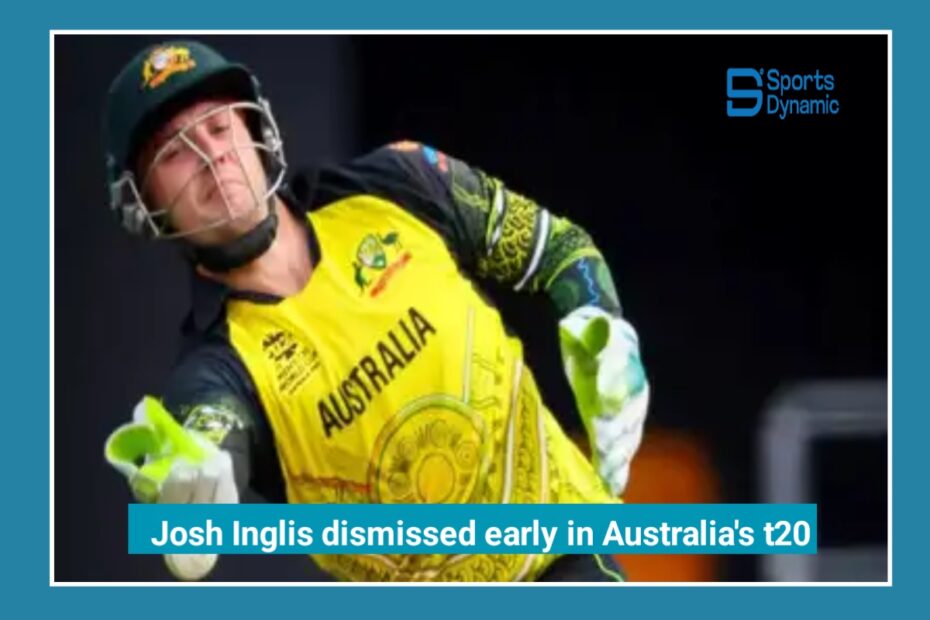
Colombo, Sri Lanka — It was one of those moments in the ICC Men’s T20 World Cup 2026 that left fans on the edge of their seats. Australia’s energetic wicketkeeper-batter, Josh Inglis, was sent back to the pavilion surprisingly early in a crucial group stage clash, leaving both spectators and cricket pundits scratching their heads about what it could mean for Australia’s campaign.
The incident happened in Match 14, where Australia was taking on Ireland in Colombo. Inglis had started his innings with real intent, looking confident and aggressive, threatening to take control of the game from the very beginning. But just when it seemed like he might play a match-changing knock, Ireland’s captain, Paul Stirling, pulled off a spectacular piece of fielding.
With a diving catch that was snatched inches off the ground in the cover region, Stirling sent Inglis packing on the fifth ball of the seventh over. Inglis had already shown glimpses of his power — sending the ball racing to the boundary and keeping Ireland’s bowlers on their toes — but a mistimed lofted shot ended up right in Stirling’s hands, cutting short what could have been a really exciting innings.
Early Impact and Match Context
Australia came into this match riding high after a strong opening win against Ireland in their first Group B game. In that earlier clash, they had really set the tone — putting on a flurry of big-hitting, almost Yusuf Pathan-style fireworks to post a competitive total of 182 for 6.
Then their bowlers came in and did a solid job, dismissing Ireland for just 115 and sealing a comfortable 67-run victory. Josh Inglis had been one of the standout performers in that game, smashing 37 runs off only 17 balls and giving Australia a perfect launchpad before he got out.
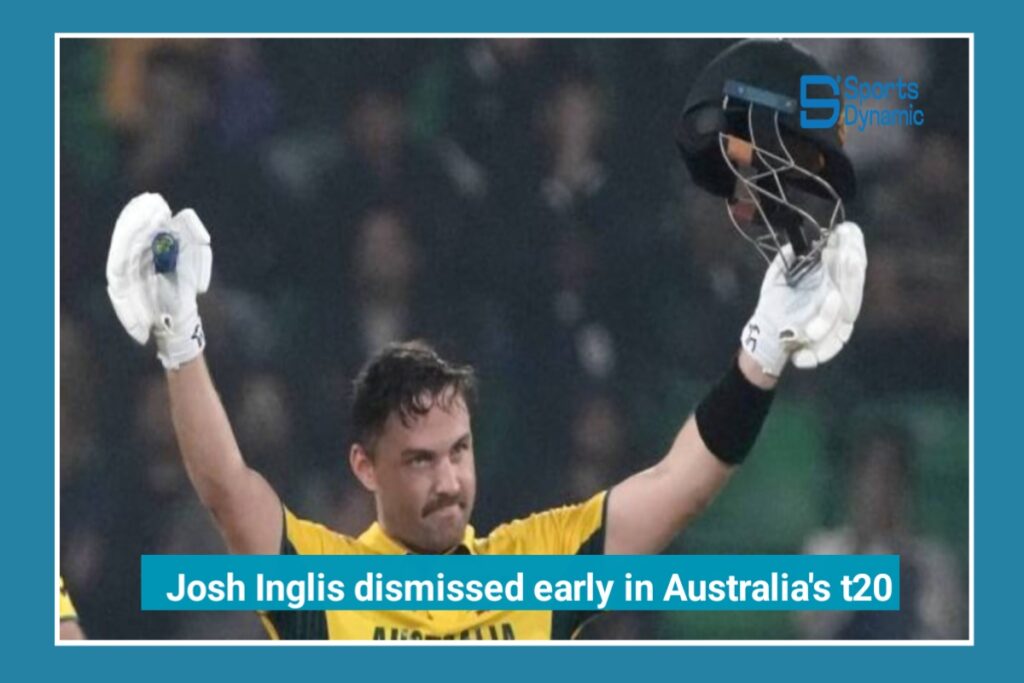
But in this next match, things didn’t quite click the same way. Australia’s batting lineup struggled to find a rhythm, especially with a few of their star players missing due to injuries or being rested. Ireland, on the other hand, bowled really smart cricket — disciplined lines, tight lengths, and clever variations kept the Australian batters under constant pressure.
Inglis’s early exit in this match was more than just losing a wicket — it was almost a warning sign about Australia’s batting vulnerability. He had started well, showing his usual aggression, and looked like he could take control and swing the momentum in Australia’s favor. But as soon as he went, the middle and lower order were left scrambling, trying to hold things together.
For someone like Inglis, who is known for his fast scoring and ability to change gears in the Powerplay, losing him cheaply is a real blow. His kind of firepower is exactly what Australia counts on to give them that early advantage, and once he was gone, the team suddenly had to rethink its approach in the middle of the innings — a tricky spot in T20 cricket.
Stirling’s Heroics: A Highlight of the Tournament
Ireland’s captain, Paul Stirling, who was already dealing with some injury worries of his own, gave fans one of the most unforgettable fielding moments of the T20 World Cup 2026. That diving catch he pulled off wasn’t just athletic — it was pure anticipation and timing, the kind of effort that makes you sit up and say, “Wow!” Fans from all over the world, not just Ireland, couldn’t stop talking about it.
Even though Ireland didn’t end up winning the match, Stirling’s role in getting rid of one of Australia’s most dangerous batters, Josh Inglis, will definitely go down as one of the highlights of the tournament. Moments like these also show that associate nations, when they rise to the occasion, can really challenge the cricketing giants and make their presence felt on the big stage.
Looking at the bigger picture, Australia’s journey through this T20 World Cup hasn’t been entirely smooth. In their opening game against Ireland, they had to deal with the absence of their regular captain, Mitchell Marsh, who was sidelined with a groin injury.
Stand-in skipper Travis Head had to take charge, and while players like Marcus Stoinis, Matt Renshaw, and Josh Inglis stepped up to deliver solid performances, the team has still faced challenges. Injuries to key players and some inconsistent batting efforts have really tested Australia’s bench strength and how flexible they can be tactically.
While the Australian bowlers have shown grit and resilience, their batting has been a different story. The team relies heavily on explosive starts and strong partnerships, and with a settled opening combination missing at times, the lineup has sometimes struggled to get going. Inglis’s early dismissal in this latest game was a reminder of that inconsistency — even top players can be vulnerable, and momentum can shift in an instant.
For Australia, every group stage game is crucial. Securing wins early is important for getting a favorable position heading into the knockouts. With tough competition from teams like Pakistan, India, South Africa, and the defending champions England, every run, every wicket, and every big moment counts. How Josh Inglis bounces back, and how the team manages to recover from early setbacks like his dismissal, will play a big role in shaping their campaign as the tournament moves forward.
Inglis: Role and Expectations
Josh Inglis has really made a name for himself as one of Australia’s most explosive T20 batters over the past few seasons. He’s the kind of player who can clear the boundary ropes almost at will and really turn the tempo up during the Powerplay, giving his team a big boost right from the start. In short, he’s a T20 specialist — the kind of player you want when the pressure is on and the team needs quick runs.
That’s why his early dismissal in this match was so significant. Australia was counting on a strong start to build momentum and set the tone for the innings, and losing someone like Inglis so quickly left a noticeable gap in the batting lineup.
Cricket experts have pointed out that this is also a reminder of how important mental toughness is in T20 cricket. Even players with enormous talent, like Inglis, can sometimes struggle to turn promising starts into match-winning performances, especially in a high-stakes tournament like the World Cup.
T20 cricket moves at such a fast pace that there’s very little room for error. Batters have to be consistent, adapt quickly, and bounce back immediately from setbacks. Inglis’s early departure highlighted that reality perfectly — it wasn’t just about losing a few runs; it was about the psychological shift it created in the innings.
Moving forward, both he and his teammates will need to focus on resilience, staying calm under pressure, and finding ways to regain momentum whenever things don’t go their way. It’s these moments that often separate the good teams from the champions in a tournament as intense as the T20 World Cup.
Fan and Expert Reactions
As soon as Inglis was dismissed, social media erupted with reactions from fans and cricket commentators alike. People couldn’t stop talking about Paul Stirling’s incredible diving catch, with many praising the sheer athleticism and timing of the effort. At the same time, debates started swirling about Australia’s batting approach.
Some critics argued that going all-out for big shots so early in the innings without first settling in and building a solid foundation — might have been a risky move. On the other hand, supporters pointed out just how unpredictable T20 cricket can be: even the most talented and experienced batters can get out cheaply, either due to a momentary lapse in concentration or a brilliant piece of fielding, just like Stirling’s catch.
Analysts also noted that while losing Inglis early was a setback, it also gave the middle-order batters a chance to take responsibility and try to guide Australia’s innings through a tricky period.
Looking ahead, Australia will need to regroup quickly if they want to maintain momentum in the T20 World Cup 2026. The tournament is still wide open, and every game counts, so the team’s depth will really be put to the test as they aim for a strong position on the points table.
For Inglis himself, this early dismissal is likely to be a learning moment a reminder of just how small the margins can be in T20 cricket and how quickly the game can turn.
The coaching staff and team leadership will probably take a closer look at batting combinations and match tactics, trying to strike the right balance between the explosive aggression that Inglis brings and the stability the team needs at the start of an innings. If they manage that, Australia remains one of the strongest contenders for the title, even if individual brilliance doesn’t always shine in every game.
In the end, Josh Inglis’s early exit wasn’t just a wicket it was a turning point in the match that highlighted the delicate balance of Australia’s batting lineup. T20 cricket is full of surprises, and moments like these shape the story of a tournament, test the team’s character, and show the importance of seizing opportunities whenever they arise.
As the World Cup progresses, all eyes will be on Inglis and the Australian team to see how they respond, adjust, and push forward in their pursuit of World Cup glory.
Also Read This-
T20 World Cup 2026: India’s Explosive Win Over Namibia Sets a Bold Statement
Record-Breaking Star Arshdeep Singh Reaches 250 T20 Wickets
FOLLOW FOR LATEST UPDATES