
Table of Contents
Netherlands Keep Namibia in Check in Delhi
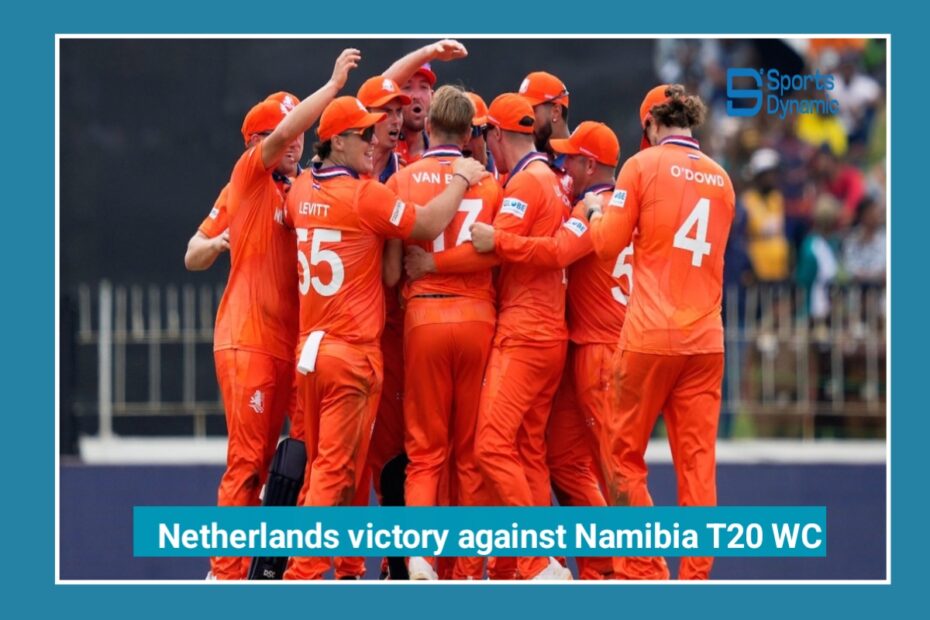
Delhi saw an exciting match as the Netherlands and Namibia faced each other in an important ICC T20 World Cup 2026 game. The stadium was full of energy, with fans cheering loudly at the Arun Jaitley Stadium. From the beginning, the Netherlands looked calm, confident, and well-prepared.
They played smart cricket, showed great discipline in bowling, and made the most of their chances while batting. Because of this balanced performance, they managed to secure a strong and convincing win, which gave a big boost to their campaign in the tournament.
This match was not just about winning or losing. It showed how much both teams have improved over the past few years. As Associate nations, the Netherlands and Namibia have worked hard to compete at a higher level, and this game proved that they now belong on the big stage. The quality of cricket on display was impressive and showed that the gap between top teams and emerging teams is slowly reducing.
Namibia came into the match with good confidence, thanks to their recent positive performances. Their players looked motivated and ready to fight. They believed they could challenge the Netherlands and put up a strong show. However, once the game started, the Dutch team slowly took control. They stayed focused, followed their game plan carefully, and did not panic under pressure.
The Netherlands played with great understanding and teamwork. Their bowlers kept things tight, their fielders were sharp, and their batters played sensibly without taking unnecessary risks. Step by step, they built pressure on Namibia and forced mistakes. In the end, it was this calm and professional approach that made the difference.
Overall, the match was a perfect example of how smart planning, patience, and discipline can lead to success in modern cricket. The Netherlands proved that they are not just participants in big tournaments anymore, but serious competitors who can dominate important games when it matters the most.
A High-Stakes Encounter in the Capital
Since both teams were aiming to qualify for the next round, this match was very important for them. The points table was very close, and even a single win or loss could change everything. Every match mattered at this stage of the tournament.
If either team had lost, it would have made their chances of qualification much weaker. On the other hand, a win would give them confidence and strong momentum going into the final and most crucial matches.
After winning the toss, Namibia decided to bat first. Their plan was clear — they wanted to put runs on the board and put pressure on the Netherlands while defending later. They hoped to score a good total and make things difficult for the chasing team.
The pitch looked quite balanced at the start. It had something for both bowlers and batters. In the early overs, fast bowlers were getting some movement, but once batters settled in, playing shots became easier.
However, the Netherlands bowlers were ready for the challenge and had no intention of making things easy for Namibia.
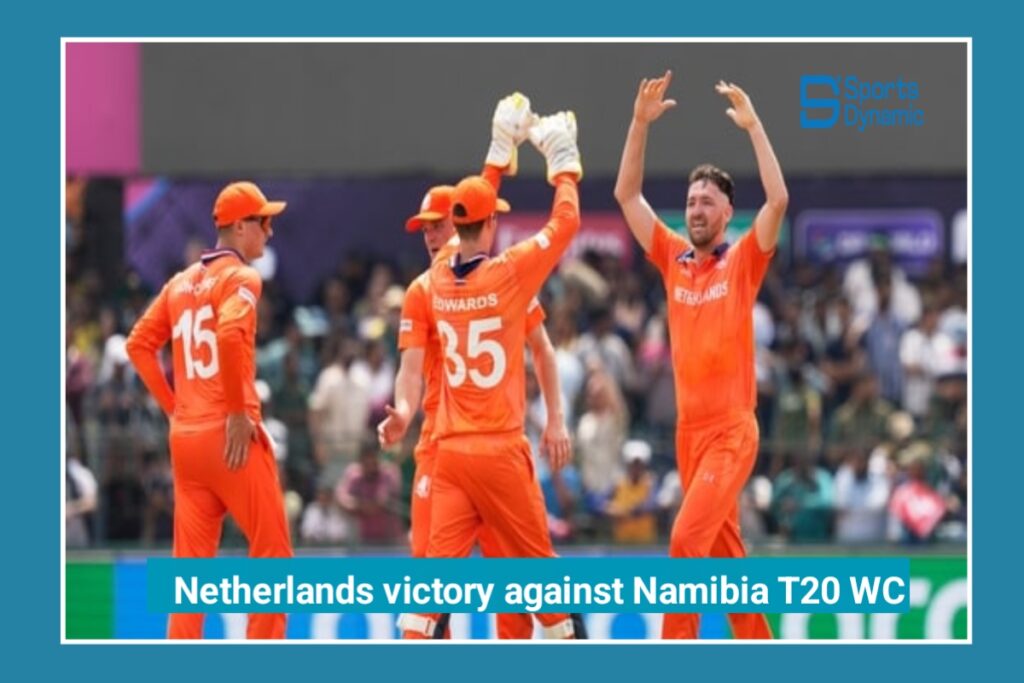
From the very first over, the Dutch team showed strong intent and energy. Their fast bowler Logan van Beek made an early impact by bowling a brilliant delivery that swung back sharply and hit the stumps. He dismissed Namibia’s opener and gave his team the perfect start. This early wicket immediately put pressure on Namibia and boosted the confidence of the Netherlands players.
After that, Paul van Meekeren and Bas de Leede continued the good work. They bowled with great control and discipline, keeping the ball in the right areas. They did not give away easy runs and forced the batters to take risks. They also used the bounce from the pitch well, making it uncomfortable for the Namibian players to play freely.
Because of this tight bowling, Namibia struggled to build any real momentum during the powerplay overs. They found it difficult to hit boundaries and mostly depended on singles and doubles.
By the end of the first six overs, they were 38 for 2. While this score did not look too bad on paper, it clearly showed that they were under pressure and had failed to get a strong start. The Netherlands had successfully set the tone early in the match and made it clear that they were in control.
Spin Stranglehold in the Middle Overs
As the innings moved forward, the Netherlands decided to bring their spinners into the attack, and from that moment, the match slowly started going in their favor. Aryan Dutt and Roelof van der Merwe bowled with great confidence and control.
They changed their speed and flight very smartly, which made it difficult for the Namibian batters to judge the ball properly. Sometimes the ball came in slow, sometimes faster, and sometimes it dipped suddenly, keeping the batters confused.
Both spinners were very good at reading what the batters were trying to do. Whenever a Namibian player tried to play a big shot, the bowlers adjusted their line and length. Because of this, many batters were forced to take risky shots, which often did not work in their favor.
Roelof van der Merwe was especially impressive during this phase. His experience was clearly visible in the way he handled pressure situations. He bowled a clever arm ball that looked like a normal delivery but turned slightly at the last moment and dismissed Namibia’s captain. This wicket was very important because it broke the team’s confidence and started a small collapse.
Soon after that, Aryan Dutt also joined the party by trapping another batter LBW with a well-directed delivery. With two quick wickets, the Netherlands tightened their grip on the match and made things even more difficult for Namibia.
Between overs 7 and 15, Namibia found it very hard to score freely. During this middle phase, they managed to score only 52 runs and also lost three important wickets. This period turned out to be the most crucial part of the match, as it stopped Namibia from building a strong total.
Even under heavy pressure, Namibia’s lower-order batters did not give up easily. Jan Frylinck and JJ Smit showed great fighting spirit and tried their best to bring their team back into the game. They played patiently, took quick singles, ran hard between the wickets, and punished loose balls whenever they got the chance.
Their partnership added some energy to the innings and helped Namibia cross the 130-run mark. For a short time, their smart running and careful attacking shots created some trouble for the Netherlands bowlers.
However, the Dutch team stayed calm and focused. They did not panic or change their plans unnecessarily. Instead, they trusted their strategy and continued bowling in the right areas.
In the final overs, Tim Pringle bowled really well and picked up important wickets. His late breakthroughs made sure that Namibia could not score fast at the end of the innings.
Finally, Namibia finished their innings at 147 for 8 in 20 overs. It was a decent total and showed good effort, but on a pitch that became easier for batting later, it was slightly below what was needed. The Netherlands knew that if they batted sensibly, this target was well within their reach.
A Confident Start to the Chase
While chasing a target of 148 runs, the Netherlands started their innings with a clear plan in mind. They knew they did not need to rush or play risky shots. Instead, they decided to stay calm, play smartly, and build their innings step by step. Their openers, Max O’Dowd and Vikramjit Singh, gave the team exactly the kind of start they needed.
Both batters played with a good balance of safety and aggression. They respected the good balls and did not take unnecessary chances. At the same time, whenever the bowlers made a mistake, they were quick to take advantage of it. Max O’Dowd looked very confident from the beginning. He played some beautiful shots, especially his cover drives and pull shots, which pleased the crowd and kept the scoreboard moving.
Vikramjit Singh supported him really well. He focused on rotating the strike, running quick singles, and keeping the pressure on the bowlers. Whenever a loose ball came his way, he did not hesitate to hit it for a boundary. Because of their strong understanding and teamwork, the two openers built a solid partnership.
By the end of the powerplay, they had added 54 runs without losing many chances. This strong start put the Netherlands in a comfortable position and reduced the pressure of the target. At that point, it looked like they were fully in control of the match.
However, Namibia did not give up easily. Realizing that the game was slowly slipping away from them, their bowlers tried hard to make a comeback. Bernard Scholtz and Ruben Trumpelmann bowled with great focus and discipline. They kept the runs under control and forced the batters to think twice before playing big shots.
Bernard Scholtz broke the partnership by bowling a smart, flighted delivery that deceived Vikramjit and led to his dismissal. Soon after, Ruben Trumpelmann added another important wicket by bowling a sharp bouncer that surprised O’Dowd and sent him back to the pavilion.
These two quick wickets changed the mood of the match for a short time. Suddenly, the Netherlands were 78 for 2, and Namibia found new hope. The crowd also became more excited, sensing that the game could still turn. For a few overs, the match became tense, and both teams felt the pressure.
It was a brief moment when Namibia looked capable of making a comeback, and the contest once again became interesting.
Middle Order Stability Seals the Deal
After the fall of two quick wickets, Namibia started hoping that they might be able to turn the match in their favor. However, those hopes did not last very long. Bas de Leede and Scott Edwards walked in at the right time and handled the situation with great calmness and confidence. Instead of panicking, both players stayed relaxed and focused on their job.
They showed great maturity in the way they rebuilt the innings. Step by step, they brought the Netherlands back into a comfortable position. They kept a close eye on the required run rate and made sure it never went out of control. There was no rush in their batting. They played patiently, waited for the right balls, and slowly put pressure back on Namibia.
Bas de Leede was very smart in finding gaps in the field. He placed his shots well and kept collecting easy runs. On the other hand, Scott Edwards played with more freedom and confidence. He was not afraid to play attacking shots when needed and kept the scoreboard moving.
Together, they targeted Namibia’s weaker bowlers and made full use of loose deliveries. They kept rotating the strike by running hard between the wickets and did not allow the bowlers to settle. Whenever the pressure started to build, they released it with timely boundaries.
Their strong and unbeaten partnership of 61 runs completely changed the match. It made sure that Namibia had no real chance of making a comeback. By the time they were done, the result was almost decided.
With two overs still left, Scott Edwards finished the match in style. He played a confident lofted shot over mid-off for the winning runs, which brought loud cheers from the crowd. The Netherlands won the match comfortably by 7 wickets, showing their class and control.
Talking about the best performers of the match, Roelof van der Merwe was clearly one of the biggest stars. He made a big impact with both his bowling and leadership. His figures of 2 wickets for just 22 runs were very important in stopping Namibia from scoring big.
Max O’Dowd also played a key role with the bat. His fluent knock of 42 runs gave the Netherlands a strong start and set the tone for the successful chase. Bas de Leede once again proved his value as a top all-rounder by scoring an unbeaten 36 and guiding his team to victory.
For Namibia, there were not many positives on a tough day. However, Jan Frylinck showed fighting spirit with his score of 31 runs. Bernard Scholtz also did well with the ball by bowling economically and trying his best to keep his team in the contest.Even though Namibia lost the match, these performances showed that they still have quality players who can perform under pressure.
What This Win Means for the Netherlands
This important win has greatly improved the Netherlands’ chances of reaching the next round of the tournament. More than just two points, this victory shows how consistent and reliable the team has become at the international level. Over the last few years, the Dutch cricket team has worked very hard to improve itself. They have focused on developing young players, strengthening their domestic cricket system, and giving their players more exposure by playing abroad.
Because of this long-term effort, their performances have become more confident and well-organized. Matches like this one, where they played with discipline, smart planning, and strong belief, clearly show how much they have progressed. Today, the Netherlands is no longer seen as a weak or outsider team. Instead, they are now considered serious competitors who can challenge even big, full-member nations.
For Namibia, this loss is disappointing, but it does not mean their tournament is over. They have played some good cricket so far and have shown that they are capable of competing at this level. However, this match also revealed some areas where they need to improve. Their middle order needs to be more stable, and they must learn how to finish innings better, especially in the final overs.
If Namibia wants to move forward in the tournament, they will need to turn good starts into big scores and stay calm in pressure situations. The good news for them is that there are still a few matches left, so they have time to bounce back and correct their mistakes. Their journey in the World Cup is not finished yet.
Looking beyond just the result, this match also showed how Associate cricket is growing stronger with each passing year. The level of skill, game awareness, fitness, and confidence on display was very impressive. In many ways, it was similar to matches played by top international teams. The excited crowd in Delhi enjoyed a high-quality contest that proved modern cricket is becoming more open, competitive, and full of surprises.
The Netherlands’ disciplined win in Delhi was a perfect example of smart T20 cricket. From taking early wickets to chasing the target calmly, they controlled the important moments of the game and followed their plans perfectly. Every player knew their role and delivered when it mattered.
As the T20 World Cup 2026 moves forward, the Dutch team continues to impress fans and experts with their strong balance, depth in talent, and self-belief. If they keep playing like this, they could achieve even bigger success and create memorable moments in the tournament.
For Namibia, this match will serve as a learning experience. They will take valuable lessons from it and come back stronger with fresh determination and confidence.
One thing is very clear now: Associate teams have truly arrived on the world stage. They are no longer just participating — they are competing seriously. And they are here to stay.
Read this too –
ICC Men’s T20 World Cup 2026 – Press Note, Dialogue on Bangladesh’s Absence
Scotland’s Stunning Victory Shakes T20 World Cup 2026 as Italy Faces Tough Debut Test
FOLLOW FOR LATEST UPDATES