
Table of Contents
What Happened in Kolkata? A Laser Show Gains Spotlight for the Wrong Reason
One of the most surprising talking points of the ongoing ICC Men’s T20 World Cup 2026 hasn’t just been about runs, wickets, or match results — it’s been about a laser show. Yes, a mid-match laser show.
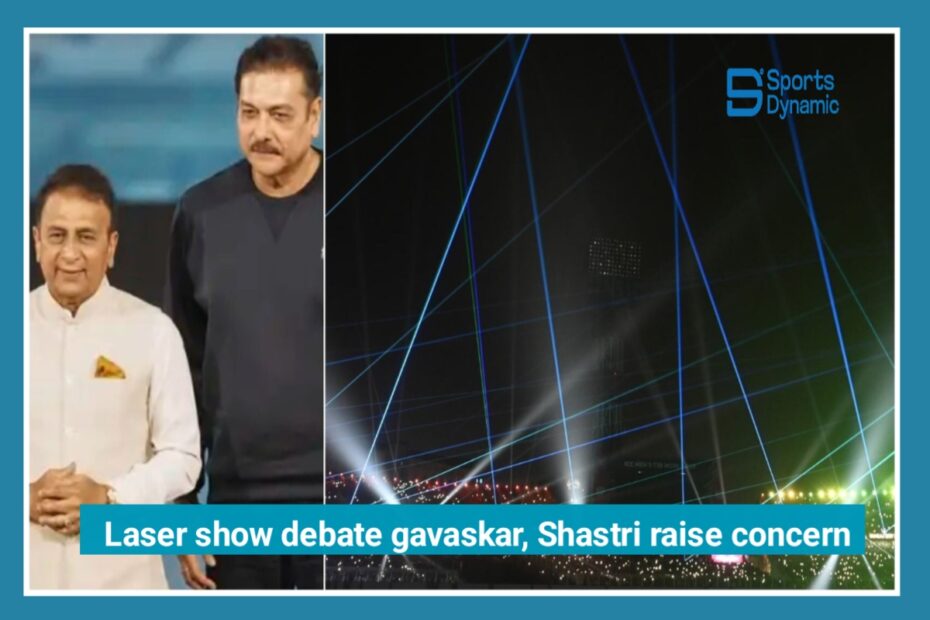
Former Indian cricket legends Sunil Gavaskar and Ravi Shastri openly questioned the decision to organise a flashy light display during a high-pressure World Cup game between India and the West Indies at Eden Gardens in Kolkata.
According to them, such grand entertainment might be fine in franchise tournaments where the atmosphere is more about glamour and showbiz, but a World Cup match carries a different level of seriousness. This is international cricket at the highest stage, where every ball matters and players are under intense pressure. For Gavaskar and Shastri, the timing of the spectacle simply didn’t feel appropriate.
What started as a small observation during commentary quickly turned into a bigger debate. The discussion moved beyond just how the show looked on television. It became about player comfort, professionalism, and whether the growing commercial side of cricket is slowly taking priority over the sport itself.
Interestingly, the controversy also reminded many fans of comments made by Australia’s Glenn Maxwell back in 2023, when he had spoken about how intense light shows during matches could cause discomfort and even headaches for players.
The incident happened on March 1, 2026, during India’s Super 8 clash against the West Indies. Given the tournament format, the match was almost like a knockout — a must-win situation for both teams. India were chasing a challenging target of 196 and had reached 53 for 2 at the end of the first powerplay. Naturally, tensions were high, and the game was finely balanced.
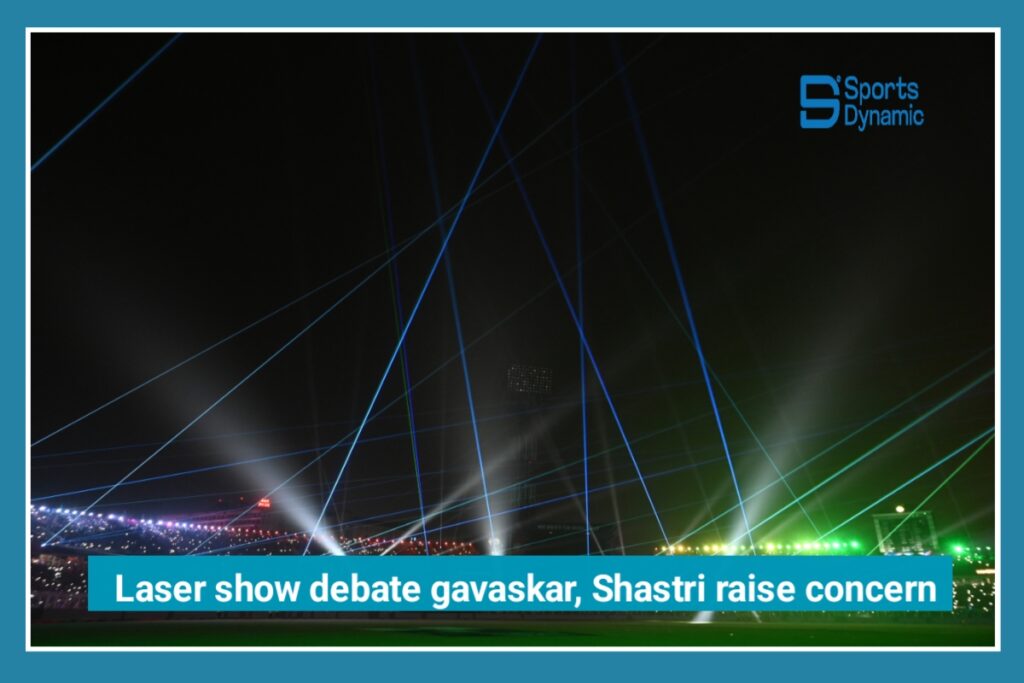
Then came the scheduled drinks break. But instead of a simple pause for players to rehydrate and discuss strategy, the stadium lights were suddenly dimmed. For nearly three minutes, a full laser show lit up Eden Gardens, with colourful beams flashing across the ground. The crowd inside the stadium seemed entertained and excited by the display. From a fan-experience point of view, it certainly looked dramatic and lively.
However, from the commentary box, the reaction was very different. Gavaskar and Shastri immediately questioned whether this was really necessary during such a crucial match. Their main concern was simple — players need rhythm and focus, especially in a tense chase. Suddenly changing the lighting conditions and creating a concert-like atmosphere in the middle of the innings could disturb concentration and visual adjustment.
For them, it wasn’t about opposing entertainment altogether. It was about context. A World Cup fixture, especially one that feels like a virtual quarter-final, demands seriousness and minimal distractions. In their view, the game itself is the biggest show, and nothing should interrupt its flow at such a critical moment.
That’s why what could have been just a flashy three-minute display ended up becoming one of the most talked-about moments of the tournament — not for what happened with the bat or ball, but for what happened when the lights went out and the lasers came on.
Gavaskar’s and Shastri’s Concerns: Focus, Vision, and the Spirit of the World Cup
While doing live commentary, Sunil Gavaskar spoke very clearly and honestly about what he felt. He didn’t try to soften his words. He openly questioned whether it was really necessary to organise such a grand laser show in the middle of a high-pressure World Cup match. According to him, this wasn’t just any regular game — both teams were under serious pressure, and every moment mattered.
Gavaskar pointed out that suddenly dimming the lights and then bringing them back to full brightness isn’t easy for players, especially batters who are right in the middle of a tense chase.
He explained that when the lights go off and then come back on, it can affect a player’s eyesight and concentration. Adjusting to bright floodlights again takes a little time, and in a format like T20, even a few seconds of distraction can make a big difference.
He basically questioned the timing. In his view, a World Cup match is not the right place for that kind of mid-innings entertainment. He mentioned that in leagues like the IPL, where the atmosphere is more relaxed and spread over many matches, such things might be acceptable. But a World Cup game carries a different level of seriousness and intensity. For him, the occasion demanded more focus on the cricket itself rather than additional spectacle.
Ravi Shastri also agreed with Gavaskar’s concerns. From a player’s point of view, he said, it’s not easy to just “switch back on” mentally and visually after such a break. Players build rhythm during an innings — bowlers find their line and length, batters settle into timing — and sudden interruptions can disturb that flow.
Shastri stressed that at the international level, especially in big tournaments like the World Cup, distractions should be kept to a minimum because every single ball can change the outcome of the match.
Both Gavaskar and Shastri made it clear that they are not against entertainment in cricket. They understand that modern cricket is also about fan engagement and creating a lively atmosphere. Their concern was more about balance — about choosing the right moment and setting for such displays. In their opinion, when player comfort, focus, and performance are at stake, the priority should always be the game itself.
In short, their criticism wasn’t about stopping entertainment altogether. It was about respecting the seriousness of a World Cup contest and ensuring that nothing interferes with the players’ ability to perform at their best.
Glenn Maxwell’s 2023 Warning Resurfaces: A Remark That Now Feels Prescient
What makes this whole discussion even more interesting is that this is not the first time players have spoken about problems caused by flashy light shows during matches. A similar concern had come up back in 2023. At that time, Australian all-rounder Glenn Maxwell had shared his experience after playing a game at Perth Stadium where bright lights and laser effects were used as part of the entertainment.
Maxwell had openly said that the intense lights actually gave him headaches and made it difficult for his eyes to adjust properly. He explained that when players are focused on the ball under normal floodlights and then suddenly exposed to sharp, colourful laser beams and dramatic lighting changes, it can be uncomfortable. For someone batting or fielding under pressure, even a small disturbance in vision can make a big difference.
At that time, many people treated Maxwell’s comments as just a personal experience. Some felt it was a minor issue or something that only affected a few players. It was seen more like an individual complaint rather than a serious warning about player welfare.
But now, with a big World Cup match witnessing a similar situation and respected voices like Sunil Gavaskar and Ravi Shastri raising concerns, Maxwell’s old remarks suddenly feel more important. What seemed like a small observation in 2023 is now being looked at as an early signal about the possible side effects of modern match entertainment.
Fans and cricket analysts have started revisiting what Maxwell had said, connecting it with the current debate. It has added more weight to the argument that while stadium shows might look exciting and entertaining, they should not come at the cost of players’ comfort or performance.
In today’s cricket, where the game is becoming more commercial and visually grand, this issue has once again raised a key question — how far is too far when it comes to entertainment? Maxwell’s earlier experience has now become part of a bigger conversation about balancing spectacle with the practical needs of the players on the field.
Critics Enforce a Clear Boundary Between Entertainment and Sport
The main point Gavaskar and Shastri were trying to make wasn’t that entertainment should be completely removed from cricket. They understand that modern-day matches are also about crowd experience, atmosphere, and presentation. Their concern was more about finding the right balance. In their view, fan engagement is important, but it should never come at the cost of player comfort or performance — especially in a World Cup match.
When it comes to a tournament as big as the World Cup, every game carries huge pressure. In this particular case, the match was crucial for qualification to the knockout stage. That’s why some experts felt the laser show was unnecessary and badly timed. They believe that during such high-stakes moments, the focus should remain entirely on the game.
Critics of the laser show have raised a few specific concerns. First is player vision and safety. When stadium lights are suddenly dimmed and then switched back to full brightness, it can take time for the eyes to adjust. For a batter facing a fast bowler, even a slight delay in visual adaptation can be risky. High-speed bowling requires sharp focus, and any discomfort can increase the chance of misjudgment.
The second issue is concentration. Cricket, especially T20 cricket, is all about rhythm. Batters build momentum, bowlers settle into their line and length, and teams follow carefully planned strategies. A sudden, flashy mid-match spectacle might break that mental flow. In a tense run chase, where timing and focus are everything, even a short distraction can matter.
The third point is about context. A World Cup is very different from a regular league tournament. The stakes are higher, the pressure is intense, and players are representing their countries on the biggest stage. For traditionalists and purists, that makes the timing of such entertainment segments more sensitive. They argue that what works in franchise cricket may not always be suitable in international tournaments.
Some former players and analysts have suggested a middle ground. Instead of cancelling these shows completely, they believe such entertainment could be limited to innings breaks or before and after matches. That way, fans still get the excitement and visual experience, but the actual flow of the game remains uninterrupted.
Public reaction has been divided. Many fans inside the stadium enjoyed the laser show. For them, it added energy and excitement to the atmosphere. Big crowds often love these modern touches, and from a spectator’s point of view, it can feel like a festival.
However, others agreed with Gavaskar and Shastri. They felt the show looked impressive but wasn’t necessary at that particular moment. According to them, it offered a few minutes of visual thrill but risked disturbing players during a crucial phase of the match.
On social media, some fans even brought up Glenn Maxwell’s earlier comments about experiencing headaches and discomfort due to intense lighting. They argued that player discomfort is not just an assumption — it’s something that has been spoken about before and should be taken seriously.
Overall, the debate shows how opinions can differ when it comes to blending sport and entertainment. Some see it as innovation and progress, while others worry that it might slowly interfere with the core essence of the game.
Match Outcome and What Comes Next
Even with all the noise around the laser show controversy, India let their cricket do the talking on the field. They went on to defeat the West Indies by five wickets in a strong and confident performance. The star of the night was Sanju Samson, who played a brilliant unbeaten knock of 97 runs. His innings guided India through a tricky chase and helped the team cross the finish line comfortably.
With that win, India officially sealed their place in the T20 World Cup semi-finals. They are now set to face England in Mumbai on March 5, 2026 — a clash that promises to be another high-pressure encounter.
Naturally, once the result went India’s way, some of the criticism around the laser show died down a bit. Many observers pointed out that if the players were truly disturbed, it didn’t show in the final outcome. According to them, India’s performance proved that the team stayed focused despite the distraction.
However, just because India won doesn’t mean the discussion has ended. The larger conversation about match presentation and player comfort is still very much alive. A lot of experts and former players believe that clearer guidelines are needed about when and how entertainment elements should be used in international matches. The idea isn’t to remove fun from cricket, but to make sure it doesn’t interfere with the flow of the game.
This whole episode has also sparked a much bigger debate about the direction cricket is heading in. The question many people are asking is simple: how modern should the presentation of cricket become before it starts affecting the core nature of the sport?
T20 cricket, especially, has grown rapidly around the world. Stadium experiences are becoming more dramatic, more colourful, and more entertainment-driven. But at the same time, cricket is still a serious competitive sport where players need concentration, rhythm, and fairness.
Finding the right balance between crowd excitement and on-field performance is going to be very important in the coming years. Fans expect a lively atmosphere, big screens, music, and special effects. But players need stable conditions and minimal distractions, especially in high-stakes tournaments like the World Cup.
The laser show controversy has basically brought this tension into the spotlight. It shows that even in an era of big budgets, sponsorship deals, and grand production value, the integrity of the game still matters the most. For legends like Gavaskar and Shastri, cricket’s competitive spirit should always come first.
Going forward, the debate will likely continue. Some will argue that modern spectacle makes the sport more attractive and engaging. Others will say that certain moments — especially during tense World Cup chases — should remain purely about cricket.
For now, the conversation isn’t going away. It’s happening in commentary boxes, on television panels, and across social media. And at the heart of it all is one simple idea: as cricket evolves and embraces new forms of entertainment, it must make sure that the game itself — its fairness, intensity, and competitive heart — never takes a back seat.
Also Read This:
India vs West Indies 2026: Sanju Samson’s Match-Winning 97 Seals Semi-Final Spot
Super 8 Thriller: India Takes on West Indies with 196-Run Target in T20 World Cup 2026
FOLLOW FOR LATEST UPDATES