
Table of Contents
T20 World Cup: India Must Solve Off-Spin Question
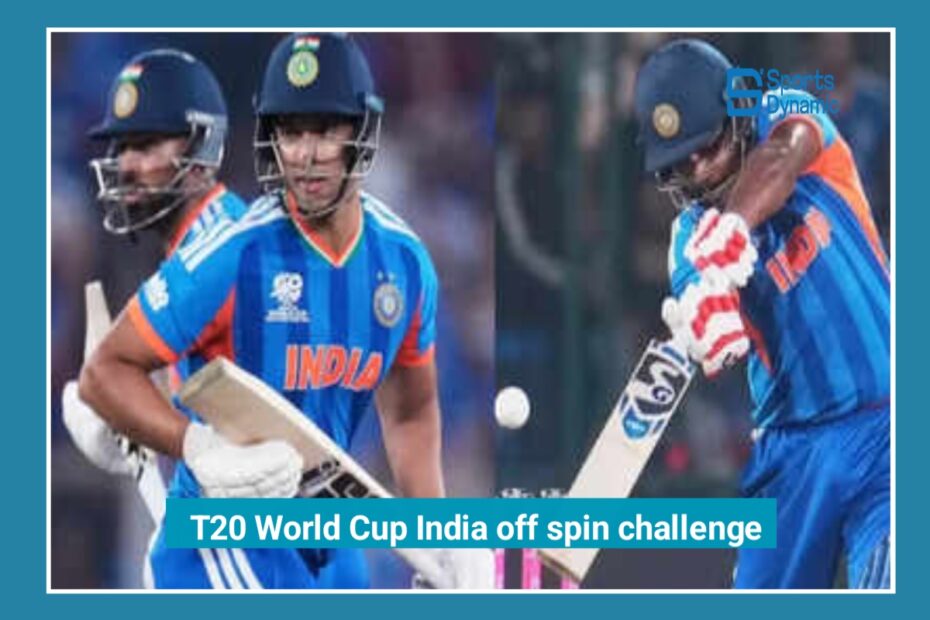
As the league stage of the ICC T20 World Cup moves toward its most important phase, all eyes are once again on the India national cricket team. At times, India have looked absolutely dominant — winning key moments, controlling games, and showing why they are considered one of the tournament favorites. But there have also been phases where they’ve looked slightly vulnerable. And with the Super 8 round just around the corner, one familiar concern has come back into focus: can India handle quality off-spin when the pressure is high?
This isn’t a new discussion. In fact, it’s something that has followed India in several major tournaments over the years. Whenever they reach the business end of an ICC event, teams tend to test them with disciplined spin bowling — especially off-spin that turns away from right-handed batters. With stronger opponents waiting in the Super 8, even small tactical mistakes could prove costly.
India’s difficulty against top-class spin, particularly off-spin, has been noticeable in previous global events. Opposition captains know the formula well. They bring on their off-spinners during the middle overs, slow the tempo of the game, tighten the field, and make scoring boundaries difficult. The aim is simple: build dot-ball pressure, frustrate the batters, and force them into risky shots.
The strategy is not complicated, but it has worked often enough to remain a reliable plan against India. When the ball grips the surface even slightly, the scoring rate tends to dip. Batters who look fluent against pace sometimes struggle to find the same rhythm against accurate spin. Singles become harder to rotate, and boundaries don’t come as easily.
We’ve already seen glimpses of this in the current tournament. There have been moments when India’s innings lost momentum once spin was introduced. Against comparatively weaker teams, they managed to recover and finish strongly. However, the Super 8 will be a completely different challenge. The quality of bowlers will be higher, the pressure will be greater, and the margin for error will be very small.
At this stage of the tournament, every over matters. A short slowdown in the middle overs could be the difference between posting a match-winning total and ending up 15–20 runs short. And in T20 cricket, that gap can decide everything.
So as India prepare for the tougher phase ahead, handling off-spin smartly — not just aggressively, but intelligently — could become one of the biggest factors in shaping their World Cup journey.
Why Off-Spin Remains a Tactical Threat
In modern T20 cricket, most batters love facing pace. When the ball comes onto the bat nicely, it’s easier to time shots, use the bowler’s speed, and find gaps with power and angles. Fast bowling often helps attacking players play their natural game. But off-spin changes that rhythm completely.
A good off-spinner doesn’t just spin the ball — he slows the game down. With clever changes in flight and pace, and by bowling into the surface, he forces the batter to create all the power on their own. That’s not always easy, especially on pitches where the ball grips or holds up slightly.
For India, whose top order is mostly right-handed, this becomes a real test. When the off-spinner turns the ball away from them, there’s always a risk of edging it behind or slicing it to a fielder in the ring. On top of that, captains usually pack the off-side with fielders, cutting off easy singles and boundary options. Suddenly, scoring becomes harder than it looks.
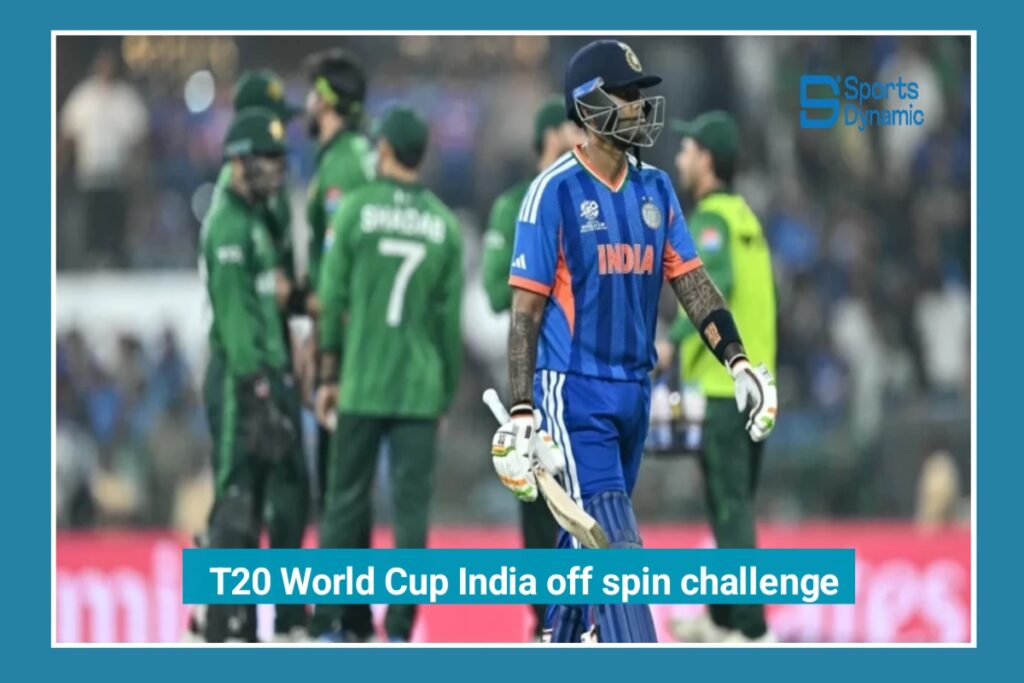
And once a few dot balls build up, the pressure rises very quickly. In T20 cricket, even three or four quiet deliveries can make a batter feel the need to play a big shot. That’s exactly what bowling sides want.
Teams like South Africa, England, and West Indies all have smart off-spinners who know how to bowl in different phases of the game — whether it’s inside the powerplay with attacking fields or during the middle overs when control is key. Against that kind of quality, simply playing safe or waiting for mistakes is not enough. Passive batting can actually make things worse.
The Middle-Over Slowdown Issue
In recent matches, India’s batting approach has looked steady and calculated rather than explosive. Captain Rohit Sharma has often given the team quick starts, taking advantage of the powerplay. But once the field spreads out and spinners come into the attack, the scoring rate has sometimes slowed down.
The middle overs — roughly from overs 7 to 15 — are usually the phase that decides T20 matches. This is when teams either build a strong platform for a big finish or lose momentum completely. Against fast bowlers, India’s batters generally look comfortable and confident. But against spin, especially tight off-spin, their intent has occasionally looked a bit cautious.
There have been moments where strike rotation hasn’t been smooth. Singles that should be taken are missed. Boundaries become rare. And as the scoreboard slows, the pressure shifts. Instead of bowlers feeling the heat, it’s the batters who start forcing shots.
If India want to truly dominate in the Super 8 stage, they can’t afford to treat the middle overs as just a survival period. They need to turn it into a phase where they stay proactive — keep the scoreboard moving, rotate strike consistently, and pick the right balls to attack. Only then can they avoid falling into the same pattern that opponents have tried to exploit in the past.
Technical Adjustments Required
Dealing with off-spin properly is not just about technique — it’s also about mindset. Batters need to be clear about what they want to do at the crease. If there is confusion or hesitation, good spinners will take control very quickly. For India, the key is to play with purpose instead of reacting ball by ball.
One important adjustment is using the depth of the crease. When a batter stands a little deeper in the crease, it gives them that extra split-second to judge the length. That extra time can make a big difference in deciding whether to go back, step out, or play late. It also helps in adjusting to the amount of turn on offer.
Another smart option is to attack with the spin rather than against it. Trying to force the ball through the off-side against the turn can be risky and often leads to edges or mistimed shots. Instead, working with the angle and targeting areas like mid-wicket or long-on can feel more natural and safer. It reduces risk while still keeping the scoreboard moving.
Sweeping is another useful weapon that can’t be ignored. The conventional sweep and even the reverse sweep can disturb a spinner’s rhythm. When batters show they are willing to use different shots, it forces the bowler to change their line and length. That small shift can open up scoring opportunities.
Perhaps the most important thing, though, is strike rotation. Even when boundaries are hard to find, taking singles and converting ones into twos keeps the pressure away. Dot balls are what really help spinners settle. If India can keep rotating strike smoothly, they won’t allow bowlers to dominate.
Someone like Virat Kohli has built his game around this strength — picking gaps, running hard, and staying calm under pressure. But even top-class players can look restricted when the bowling is tight and the field is well set. Recent tournaments have shown that disciplined spin can tie down even the best in the world if they aren’t proactive.
The Team Combination Question
Beyond individual technique, team selection also plays a big role in handling spin. The balance of the playing XI could decide how effectively India deal with spin-heavy attacks in the Super 8.
For example, should India add another left-hander in the middle order? A left-right combination can automatically disturb a spinner’s line. Bowlers don’t get the luxury of settling into one angle, and captains are forced to adjust field placements constantly.
Another option could be promoting a naturally aggressive spin-hitter up the order. A batter who is confident against spin can change the momentum of the middle overs. Sometimes, one attacking over against a spinner can shift the entire pressure back onto the bowling side.
If India don’t have that flexibility, opponents may simply stick to predictable matchups and bowl to a set plan. In high-pressure games, predictability can become a weakness.
That’s why the team management and think tank need to carefully review whether their current XI has enough variety and adaptability. The Super 8 won’t allow too many second chances. Having the right mix of batters — in terms of handedness, intent, and skill against spin — could make all the difference.
Lessons from the Past
In earlier T20 World Cups, India’s journey has often come to an end in matches where spin bowling made a big impact. Sometimes it was because the team slowed down too much in the middle overs. Other times, it was because batters tried to break free with risky shots and ended up losing wickets at the wrong moments. The pattern has been quite clear — whenever India have struggled to control or attack spin, their scoring rate has dropped, and the pressure has built up quickly.
That said, this current squad feels a bit different. There’s more experience in the dressing room and a better understanding of match situations. The players have been through tough tournaments before, and the coaching staff has repeatedly spoken about staying flexible and reading conditions smartly. Throughout this World Cup, there has been a visible focus on adapting to different pitches and scenarios instead of sticking to just one fixed approach.
The Super 8 stage, though, will test that mindset properly. At this level, it’s not only about having the right shots or skills. It’s about recognizing what’s happening in the moment and making quick adjustments. Teams that learn fast and correct mistakes immediately are the ones that move forward.
Opposition Analysis: A Tough Road Ahead
The next round is expected to include some of the strongest bowling attacks in international cricket. There won’t be any easy games. For example, South Africa have quality off-spinners who are comfortable bowling in high-pressure situations, whether it’s inside the powerplay or in the middle overs. England, on the other hand, rely on smart spin options who use subtle changes in pace and clever field settings to control scoring.
Even if the pitches are flat and good for batting, accurate off-spinners can still make life difficult. They don’t always need big turn. Sometimes, simple consistency — hitting the right areas again and again — is enough to dry up runs and create frustration.
India also have to assume that every opponent has done their homework. In modern cricket, teams study video footage carefully. They analyze patterns, preferred scoring areas, and weaknesses. If India have shown any vulnerability against spin, rival teams will definitely try to exploit it.
The Mental Side of the Battle
Playing spin well isn’t just about technique — it’s also about staying calm. Dot balls can quietly build pressure. After three or four quiet deliveries, a batter may start feeling the need to attempt something big. That’s often when mistakes happen.
The key is to stay patient without becoming defensive. Batters need to trust their plans and avoid panic. In big tournaments, the mental battle is sometimes even more important than the technical one. If India can stay composed, rotate strike smartly, and wait for the right balls to attack, they can prevent spin from becoming a problem.
As the Super 8 approaches, handling that mental pressure could be just as important as handling the turning ball itself.
The key lies in patience without passivity.
India’s leadership group — especially Rohit Sharma and the senior players in the squad — will have a huge role to play in the coming matches. In pressure situations, it’s very easy for teams to panic or rush decisions. That’s where experience really matters. The team needs calm thinking in the middle, clear communication, and smart choices about when to attack and when to hold back.
Instead of trying to force the scoring rate up suddenly, India will need controlled aggression. That means picking the right bowlers to target, choosing the right moments to go big, and not feeling desperate if a couple of overs are quiet. In knockout-style games, it’s not always the most aggressive team that wins — it’s the one that stays composed under pressure. The difference between champions and just good teams often comes down to how well they handle tense moments.
Bowling Strength Can Help Cover Batting Gaps
One positive for India is that their bowling attack has looked strong throughout the tournament. The fast bowlers have managed to take important wickets at key stages of matches, stopping opponents from building big partnerships. At the same time, India’s spin bowlers have done a good job of keeping things tight and building pressure from their end.
Because of this, even if the batting unit doesn’t have a perfect day — especially in the middle overs — India still have the kind of bowling lineup that can defend competitive totals. They don’t always need 200-plus scores to feel confident. If they put up a solid, fighting total on the board, their bowlers are capable of protecting it.
That said, depending only on bowling can be dangerous, especially in a tournament where pitches can be flat and high-scoring games are common. If the batting struggles badly, it puts extra pressure on the bowlers to be perfect. In big matches, that’s not an ideal situation.
To truly go deep in the Super 8 and beyond, India will need both departments firing together. A balanced performance — steady batting combined with disciplined bowling — will give them the best chance of staying in control and pushing towards the title.
What Success Against Off-Spin Would Look Like
If India manage to properly handle the off-spin challenge in the Super 8 stage, the impact could be huge. For starters, the scoring rate in the middle overs — especially from overs 7 to 15 — would naturally improve. Instead of slowing down, the team would be able to keep the scoreboard ticking at a healthy pace.
You would also see fewer dot balls building pressure. When batters rotate strike confidently against spin, it changes the entire flow of the innings. Partnerships in the middle order would look more stable and productive, rather than scratchy or tense. And perhaps most importantly, opposition captains might be forced to change their plans. If their off-spinners are not getting control, they may have to bring back pace earlier than they would like — which could play into India’s strengths.
All of this would significantly boost India’s chances of going all the way in the tournament. In T20 cricket, small tactical victories in certain phases often decide big matches.
Looking at the Bigger Picture
Every major tournament has a key storyline that defines a team’s journey. For India in this T20 World Cup, that storyline could very well be how they deal with off-spin. The skill level in this squad is not in doubt. The players have plenty of international experience. And the hunger to win another ICC title is clearly there.
But once the Super 8 begins, past records and reputations won’t matter much. At that stage, it’s all about performance on the day. Execution becomes more important than reputation. Plans need to be carried out under pressure, not just discussed in team meetings.
If India can turn what has been seen as a weakness into an area of strength, it would not only help them win matches — it would also send a strong signal to other teams that they have no obvious gaps to target. That kind of confidence can change the entire mood of a campaign.
The Super 8 is more than just the next step in the tournament. It’s a real test of how adaptable, calm, and tactically sharp a team can be when the pressure rises. For India, finding answers to the off-spin challenge might just be the key factor that decides whether they fall short again or finally lift the trophy.
Also Read This:
Historic Upset: Zimbabwe Stun Sri Lanka in T20 World Cup 2026, Enter Super Eights Unbeaten
West Indies Enter Super Eight Stage with Unbeaten Run | ICC T20 World Cup 2026
FOLLOW FOR LATEST UPDATES