
Table of Contents
IPL Legends Who Never Won the Orange Cap
The Indian Premier League, or IPL, is easily one of the most fun and exciting cricket tournaments you can watch. Every year, fans get to see top players from around the world come together, score big runs, and put on a proper show. There’s always something happening—close matches, big sixes, and amazing performances that keep everyone hooked.
One of the biggest highlights of every IPL season is the Orange Cap. It’s given to the batter who scores the most runs in that particular season. For many players, it’s a big achievement because it shows not just talent, but also consistency and the ability to perform again and again throughout the tournament.
Over the years, we’ve seen many great players win this award and make a name for themselves. But here’s the interesting part—some of the biggest IPL legends have never won the Orange Cap. And that’s actually quite surprising if you think about it.
These are players who have played for many years, scored thousands of runs, and won matches for their teams in tough situations. They’ve entertained fans, built strong reputations, and delivered some unforgettable moments. Still, somehow, they never ended up finishing as the top run-scorer in any season.
This clearly shows one important thing about T20 cricket—it’s not always about being number one on the scoreboard. Sometimes, what really matters is the role a player plays in the team. Not everyone is there to score the most runs. Some players come in different situations, play different roles, and contribute in ways that don’t always reflect in big numbers.
So in the end, success in the IPL is not just about awards like the Orange Cap. It’s also about impact, match-winning performances, and how much a player contributes to the team’s success.
Rohit Sharma – A Champion Leader Without the Orange Cap
When we talk about IPL legends, Rohit Sharma is definitely one of the first names that comes to mind. As the captain of Mumbai Indians, he has led the team to five IPL titles, which is a huge achievement and shows how strong a leader he is.
Rohit is known for his smooth and stylish batting. The way he times the ball and plays those effortless shots makes it look so easy. Over the years, he has scored more than 7000 runs in the IPL, which clearly shows how consistent he has been throughout his career. He has played many important innings and has helped his team in crucial moments.
If we talk about his best season, 2013 was probably his standout year. He scored over 500 runs and played a big role in helping Mumbai Indians win the title that season. That year really showed his value as both a captain and a batter.
But even after all these achievements, one thing that surprises many fans is that Rohit has never won the Orange Cap. The main reason behind this is that he has never had that one season where he completely dominated and finished as the highest run-scorer.
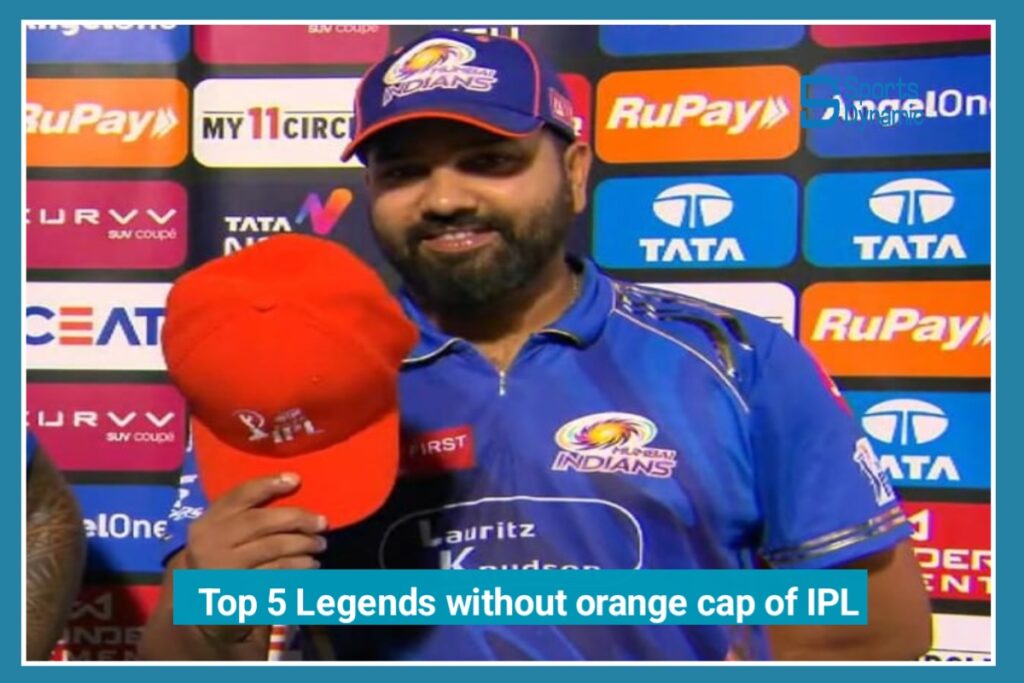
Instead, Rohit has always been someone who performs steadily across seasons rather than going all out for personal records. His focus has mostly been on winning matches and contributing to the team’s success rather than chasing individual awards. And honestly, that’s what makes him such a great player and leader.
Shikhar Dhawan – Consistency Without the Crown
Shikhar Dhawan is another player who has been super consistent in the IPL over the years. As an opener, his main job has always been to give his team a solid and steady start, and he has done that really well no matter which team he played for—whether it was Sunrisers Hyderabad, Delhi Capitals, or Punjab Kings.
He has scored more than 6500 runs in his IPL career, which clearly shows how reliable he has been season after season. Dhawan might not always look flashy, but he knows how to build an innings, play smart cricket, and keep the scoreboard moving.
He actually came very close to winning the Orange Cap, especially in 2020 and 2021. In both those seasons, he was among the top run-scorers and stayed in the race almost till the end. But somehow, he just missed out both times.
This just shows how tough and competitive the IPL really is. Sometimes, even if you perform really well, a small dip in form or another player having an extraordinary season can change everything.
Dhawan’s consistency is something every team values a lot, but the only thing missing is that one standout season where he completely dominates and finishes at the very top. Still, his overall contribution to the IPL is massive, and that matters much more than just one award.
Suresh Raina – Mr. IPL Without the Award
Suresh Raina, who is often called “Mr. IPL,” was one of the most dependable players, especially in the early years of the tournament. While playing for Chennai Super Kings, he was like the backbone of the batting lineup and someone the team could always rely on.
Raina scored more than 5500 runs in his IPL career, which shows how consistent he was over so many seasons. His batting style was a perfect mix of aggression and control—he could attack when needed but also play smart cricket depending on the situation. That’s why he was so valuable for his team.
In many important matches, Raina stepped up and played crucial innings when his team needed him the most. He was one of those players who you could trust in pressure situations, and more often than not, he delivered.
But even after all this, one surprising fact is that he never won the Orange Cap. Even in his best seasons, when he scored more than 500 runs, he still couldn’t finish as the highest run-scorer.
It might feel a bit unexpected considering how impactful he was, but it also shows how competitive the IPL has always been. Sometimes, even being consistent and performing well is not enough—you also need that one extraordinary season to stay ahead of everyone else.
AB de Villiers – The Game-Changer
AB de Villiers is considered one of the most creative and innovative batters in cricket history. While playing for Royal Challengers Bangalore, he gave fans some of the most entertaining moments with his 360-degree shot-making and fearless style of batting. The way he could hit the ball to any part of the ground made him really special and different from others.
Over his IPL career, AB scored more than 5000 runs and played many unforgettable innings that fans still talk about. Whether it was chasing big targets or turning games around in just a few overs, he always had that ability to do something extraordinary.
If we talk about his best season, 2016 was clearly his standout year. He scored close to 700 runs and was in amazing form throughout the tournament. But even after such a strong season, he still ended up finishing only third in the Orange Cap race, which is quite surprising.
The main reason behind this is his batting position. Unlike openers who get a lot of time to settle and face more deliveries, AB usually batted in the middle order. That means he often came in later, with fewer balls to play, which naturally limited his chances of scoring very big totals over the season.
So even though his overall impact on matches was huge and he played some incredible innings, his total runs didn’t always match up with top-order batters who had more opportunities. Still, his style, consistency, and match-winning ability make him one of the greatest IPL players ever.
Ajinkya Rahane – The Underrated Performer
Ajinkya Rahane might not always be in the headlines or getting all the attention, but he has been one of the most reliable and steady players in the IPL over the years. He’s known for his calm mindset and classical batting style, which is very different from the aggressive approach we usually see in T20 cricket.
Rahane has scored more than 5000 runs in the IPL, which shows how consistent and dependable he has been for his teams. One of his best seasons came in 2012 when he was playing for Rajasthan Royals. That year, he scored around 560 runs and played a big role for his team.
But even after such a strong season, he still couldn’t win the Orange Cap. The main reason is his style of play. Rahane usually focuses on building the innings, playing steady cricket, and giving his team a solid base rather than going all-out attacking from the start.
While this approach is very important for the team and helps in many situations, it sometimes means he doesn’t score those very big, eye-catching totals that are needed to finish as the highest run-scorer in a season.
Still, his value goes beyond numbers. His consistency, technique, and ability to handle pressure make him a very important player, even if he doesn’t always get the spotlight.
What This Tells Us About T20 Cricket
The absence of these big names from the Orange Cap list highlights an important aspect of T20 cricket—your role in the team matters more than your reputation. Most Orange Cap winners are top-order batters who get more opportunities to score runs.
On the other hand, players like AB de Villiers or even Rohit Sharma in certain roles focus more on impact rather than accumulation. They might not score the most runs, but their contributions often decide matches.
Another key factor is consistency. To win the Orange Cap, a player needs to perform throughout the entire season. Even a few low-scoring matches can cost a player the top spot.
In the end, the Orange Cap is just one way to measure success, but it doesn’t define a player’s legacy. Players like Rohit Sharma, Shikhar Dhawan, Suresh Raina, AB de Villiers, and Ajinkya Rahane have achieved much more than just individual awards.
They have entertained fans, won matches for their teams, and created unforgettable moments in IPL history. Their impact goes far beyond numbers, proving that greatness in cricket is not just about statistics, but about influence, consistency, and the memories they leave behind.
As the IPL continues to grow, new stars will emerge and records will be broken. But the legacy of these players will always remain strong, reminding us that sometimes, being a legend is more important than winning a trophy.
Also Read This:
Sanju Samson Opens Up About His First Interaction with MS Dhoni During IPL
IPL History of Controversies: From Spot-Fixing to On-Field Drama (2008–2026)
FOLLOW FOR LATEST UPDATES