
Table of Contents
Colombo Rain Threat, PAK vs NZ T20 World Cup Super 8 Clash
The much-awaited ICC Men’s T20 World Cup 2026 Super 8 clash between Pakistan and New Zealand at the R. Premadasa Stadium in Colombo has turned out to be about more than just cricket — the unpredictable Sri Lankan monsoon weather is playing an equally starring role. Fans, players, and cricket analysts are all on edge, glued to live updates, trying to figure out if and when the match will actually get underway, and what the implications will be if it doesn’t.
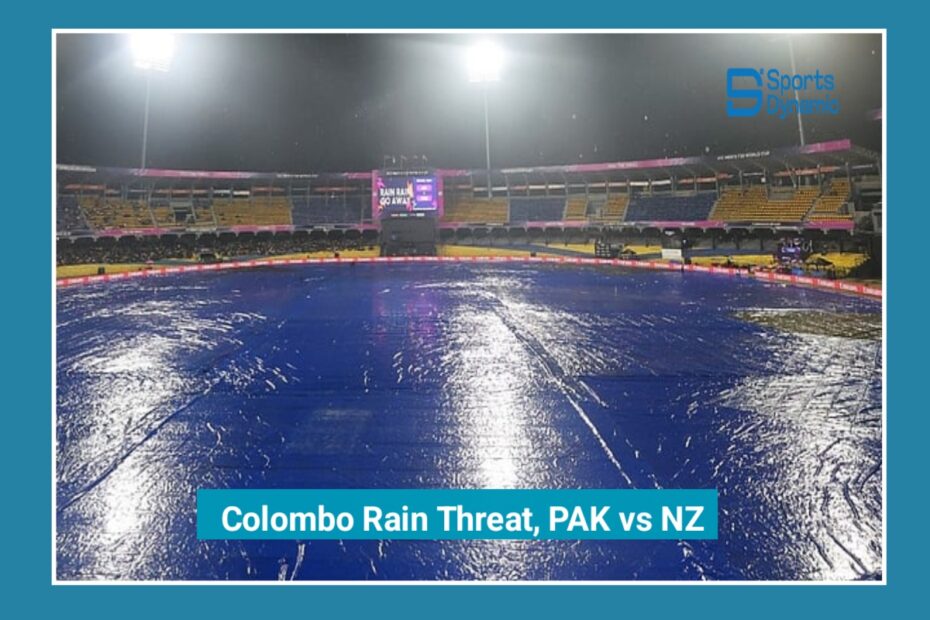
The game was originally scheduled to start at 7:00 PM local time on Saturday, with Pakistan winning the toss and choosing to bat first. However, before a single ball could be bowled, continuous heavy rain and intermittent downpours began to disrupt the proceedings.
The outfield quickly became waterlogged, leaving the ground staff scrambling to keep covers in place, while players from both sides had to wait nervously in the dressing rooms. The persistent showers not only delayed the start of the match, but also created uncertainty about whether a full 20-over game would even be possible, putting the teams’ strategies and nerves to the ultimate test.
Why is Rain a Crucial Factor in Colombo?
The weather forecast in Colombo on the day of the Super 8 clash painted a rather gloomy picture for cricket fans. Meteorologists predicted a high likelihood of rain both before and during the scheduled match, with intermittent showers expected to continue from the afternoon well into the evening.
According to the latest forecast models, there was roughly a 68‑80 percent chance of rainfall around the match’s starting time, and even as the evening wore on, the risk of showers remained significant, compounded by humidity levels hovering above 80 percent.
Unlike some other T20 venues, the Premadasa Stadium — although known for its efficient drainage system — has struggled to cope with the recent persistent rain. In the days leading up to the match, practice sessions were repeatedly cancelled or shortened, and the outfield remained soggy, making it difficult for ground staff to prepare the playing surface for a full match.
All these factors combined meant that the likelihood of completing a full 20-overs-a-side game was steadily diminishing, adding a layer of anxiety and uncertainty for both teams, officials, and fans eagerly waiting for the action to begin.
What Is the Cut‑Off Time for the PAK vs NZ Game?
According to the official rules of the ICC T20 World Cup Super 8 stage, there are very clear guidelines when it comes to rain-affected matches. First and foremost is the Minimum Playing Requirement: for a game to produce an official result, each team must face at least five overs. If this minimum isn’t met, the match cannot be completed under ICC rules and will automatically be declared a No Result, meaning neither team wins or loses.
Then there’s the matter of the cut-off time for a reduced, five-overs-per-side game. For this particular match, the final cut-off is 10:16 PM IST. That is the absolute latest that officials can begin play and still have enough time to complete a shortened contest. If the rain doesn’t let up and the teams aren’t able to face at least five overs each by this time, the game will be washed out completely and no points can be awarded.
The 10:16 PM cut-off isn’t arbitrary — it includes extra time to account for delayed starts, slow ground preparation, and possible interruptions. Beyond this time, not only does daylight or floodlight become insufficient, but player safety can also be seriously compromised. In other words, match officials must get the players on the field and ensure that the minimum overs are bowled within this window for the game to count toward the Super 8 points table.
It’s also important to note that, unlike knockout matches such as semi-finals or finals, there is no reserve day for Super 8 group-stage games. This means that the cut-off time is absolute and final — officials do not have the option to postpone the match to the next day, no matter how heavy the rain continues to be. The teams, fans, and commentators all have to accept that once the clock passes the cut-off, the game’s fate is sealed.
What Happens If Rain Stops Play Entirely?
If the rain continues to pour and the minimum requirement of five overs per side cannot be completed, the match will automatically be declared a No Result. In such a case, both Pakistan and New Zealand would share one point each. This is standard practice in ICC tournaments whenever group-stage or Super 8 matches are affected by weather interruptions.
This outcome carries several important implications. First, there is no reserve day for Super 8 matches, unlike the knockout stages such as semi-finals or finals. That means once the rain prevents play from reaching the minimum overs, there is no option to postpone or replay the game on another day. Second, the impact on the tournament standings can be significant.
Both teams would earn just one point instead of the usual two for a win, which could potentially alter the semi-final qualification scenarios, making every remaining game even more critical.
Another factor is Net Run Rate (NRR). In a washout scenario, neither team records a win or a loss, so the NRR remains unchanged. However, the lost opportunity to earn full points can make it harder for teams to climb the points table, especially in such a tight Super 8 group.
For fans of Pakistan and New Zealand, a washout would be particularly frustrating given the high stakes at this stage, with tough competition from teams like England and Sri Lanka in Group 2. Every single point counts as teams battle for a top-two position to secure a place in the semifinals.
On the other hand, there is a possible alternative if the weather allows. If conditions improve enough for play to commence, the match could be shortened under ICC’s rain rules. In this case, teams might play a reduced-overs match, with fewer than the usual 20 overs per side. The Duckworth-Lewis-Stern (DLS) method would then be applied to calculate revised targets, taking into account the number of overs available and the weather interruptions.
For example, if the match starts late due to rain and overs are reduced, a five-overs-per-side contest could still produce a result — but only if play begins in time and the minimum required overs are completed before the 10:16 PM cut-off.
This scenario at least gives hope for a decisive outcome, particularly for Pakistan and New Zealand, who are both keen to secure maximum points. However, everything hinges on whether the rain finally eases up and allows the ground staff to prepare a playable outfield in time.
Why This Match Matters
This Super 8 clash between Pakistan and New Zealand is particularly crucial because of the stakes involved. Both teams finished second in their respective group stages, setting up what promises to be a high-intensity, head-to-head encounter in the Super 8 stage.
A decisive result in this match could significantly influence the qualification paths for the semifinals, making every run, wicket, and strategic decision matter even more. With only three matches per team in the Super 8s, a win worth two points can be the difference between advancing and elimination, which is why any weather interruption becomes a major concern for players, coaches, and fans alike.
Despite the looming threat of rain, both Pakistan and New Zealand are mentally and tactically preparing for all possible scenarios. Whether the match is reduced to a shortened overs contest or ends up being completely washed out, teams know they need to adapt quickly, which is an essential skill in T20 cricket, especially at monsoon-affected venues like Colombo where rain can strike unpredictably.
Coaches are constantly adjusting strategies, discussing batting orders, bowling plans, and field placements, while players stay ready to jump into action at a moment’s notice.
As of the latest updates, heavy clouds and intermittent showers continue to hover over Colombo, making the weather a central character in the story of this match.
The drama on the pitch has been mirrored by a sort of “football-like tension” in the air, where fans, players, and commentators are constantly watching the skies as closely as they watch the scoreboard. In T20 cricket, especially at high-stakes tournaments like the World Cup, the elements can be just as unpredictable as the game itself, and today in Colombo, rain has taken center stage.
All eyes are now on the 10:16 PM IST cut-off time. Whether play begins before this deadline or the match is ultimately declared a No Result, this moment will prove pivotal for both teams’ Super 8 campaigns. Fans around the world are anxiously following every update, checking weather reports, radar images, and live commentary, hoping that the rain will give way enough to allow some cricket to be played.
The hope is that, despite the weather, this marquee clash can deliver the excitement and results that fans have been eagerly anticipating a true showcase of high-pressure cricket between two competitive teams.
Also Read This:
New Zealand vs Pakistan Super 8: How Mitchell Santner’s Return Could Change the Game
Match Officials Announced for Super 8 – ICC MEN’S T20 WORLD CUP 2026
FOLLOW FOR LATEST UPDATES