
Table of Contents
T20 World Cup 2026 SA vs NZ Semi-Final in Kolkata
Everything is perfectly lined up for what promises to be one of the biggest games of the ICC Men’s T20 World Cup 2026 — the first semi-final between South Africa and New Zealand at the legendary Eden Gardens in Kolkata.
Both sides have played some really impressive cricket throughout the tournament. They’ve fought hard, handled pressure well, and now they’re just one step away from the final. Naturally, fans across the world are super excited and can’t wait to see which team grabs that golden ticket to the title clash.
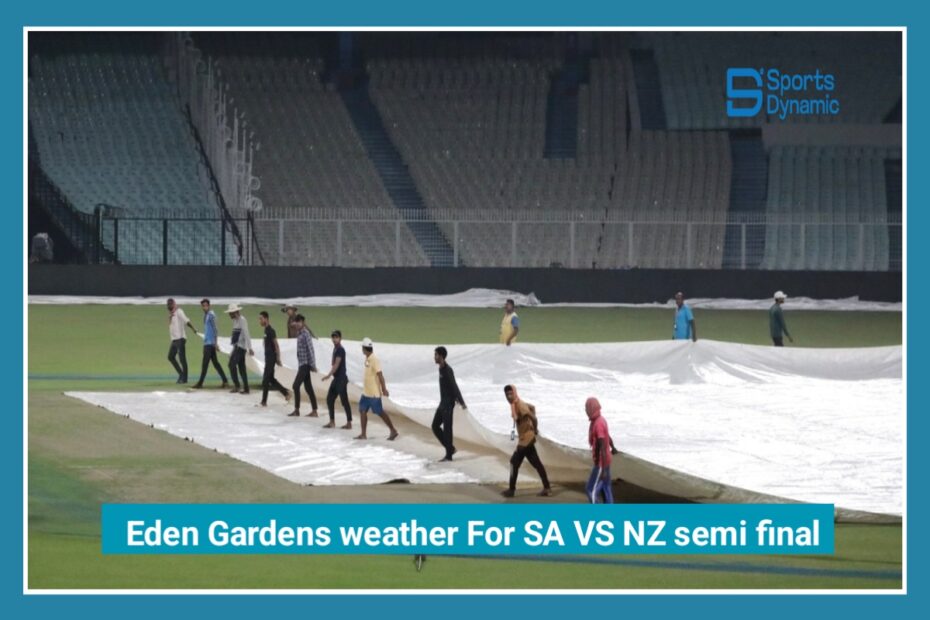
But as always in cricket, there’s one factor no team can control — the weather. With forecasts hinting at possible rain in Kolkata, a big question is doing the rounds among supporters: what if the SA vs NZ semi-final gets washed out? What happens then? Does the match get replayed? Is there a reserve day? Or does one team automatically move ahead?
If you’re confused about the rules or just want a clear idea of the different possibilities, don’t worry. In this article, we’ll explain everything in simple, easy language. From reserve day rules to qualification scenarios, we’ll walk you through all the outcomes — so no matter what the skies decide on match day, you’ll know exactly what it means for both teams.
Why Weather Could Play a Big Role in Kolkata
Kolkata’s weather around early March can be a little tricky. Most of the time, it stays dry and pleasant, but every now and then, the conditions can suddenly change. A bit of cloud cover can quickly turn into unexpected showers, and that’s enough to interrupt a cricket match.
When you’re talking about a World Cup semi-final — where a place in the final is on the line — even a small rain delay becomes a big concern. So it’s completely natural that both teams and their fans are keeping one eye on the weather forecast.
We’ve already seen rain play spoilsport in a few matches earlier in this tournament. Some games were shortened because of reduced overs, and a couple were even abandoned. That’s why the discussion around weather feels even more serious now that the knockout stage has arrived. At this point in the competition, nobody wants a semi-final to be decided by rain instead of runs and wickets.
That’s exactly why the ICC has a backup plan in place. To make sure such an important game doesn’t get washed away without a result, reserve days have been scheduled for the semi-finals and the final of the T20 World Cup 2026. Think of it as a safety cushion.
Here’s how it works in simple terms. The South Africa vs New Zealand semi-final is set to be played on March 4, 2026, at Eden Gardens. But if heavy rain completely ruins that day and no proper match is possible, there’s no need to panic. The game will move to the reserve day, which is March 5. On that day, the match can either start fresh or continue from where it stopped, depending on how much play was possible earlier.
The idea behind the reserve day is simple — to give both teams a proper and fair chance to compete. In a high-stakes game like a World Cup semi-final, the ICC wants the result to be decided on the field, not by the weather. So even if rain interrupts the original schedule, there’s still a strong possibility that fans will get to see a full contest the very next day.
How the Match Would Be Played on a Reserve Day
If it rains on the scheduled match day but not heavily enough to completely cancel everything, the game can still go ahead — even if it’s broken into parts. For example, if the semi-final begins on March 4 and some overs are played before rain stops the action, the match doesn’t just disappear. Instead, whatever has already happened — the runs scored, wickets taken, and overs completed — will all be counted.
If there isn’t enough time to finish the game that day, the remaining part of the match will continue on the reserve day. And the important thing to understand is that it won’t restart from zero. The players will pick up exactly from where things were paused. So if one team was 75 for 2 after 10 overs, that’s exactly how they’ll resume the next day. Nothing gets erased.
This system is there to make things as fair as possible. In a format like T20 cricket, even two or three overs can completely change the direction of a match. Momentum shifts quickly, and one big over can turn the game on its head. That’s why the ICC wants to ensure that if a semi-final starts, it gets a proper chance to finish — even if it spills into the next day.

Now, another important rule comes into play — the minimum overs requirement. In T20 cricket, there has to be a minimum number of overs bowled for a match to officially produce a result. Usually, both teams must bat for at least five overs each. If that doesn’t happen, the game can’t be declared complete in normal circumstances.
But when it comes to high-pressure knockout games like a World Cup semi-final, things are taken even more seriously. The ICC wants a proper contest, not a rushed or unfair outcome. So if rain ruins March 4 and even the reserve day on March 5, and not enough overs are bowled for a valid result, then the match cannot be decided on the field.
That’s when the tournament’s official rules step in to determine who advances. It’s a last-resort situation, but it’s there to ensure the competition can still move forward, even if the weather refuses to cooperate.
What Happens If the Semi-Final Can’t Be Completed Even on the Reserve Day?
Now let’s talk about the worst-case scenario — something no fan really wants to think about, but it’s still possible. If heavy rain completely washes out the match on the scheduled day and even the reserve day, then there simply won’t be enough cricket played to decide a winner on the field.
In that situation, the result won’t be decided by something random like a coin toss or drawing lots. Instead, there’s a clear rule already in place. The team that finished higher in the Super Eight standings will automatically move on to the T20 World Cup final.
Yes, it sounds tough, especially for the team that misses out without getting a proper chance to fight it out in the semi-final. But this rule exists for a reason. It makes the earlier stages of the tournament extremely important. It’s not just about performing well in one big knockout match — it’s about being consistent throughout the competition. Teams that top the Super Eight table have shown they can deliver match after match, under different conditions and against different opponents.
So in a way, this rule rewards overall performance across the tournament. If rain makes it impossible to have a fair semi-final contest, the team that has already proved itself over several games gets the advantage.
Why does this rule matter so much? Because knockout matches are huge. When a place in the final — and possibly the trophy — is at stake, every detail becomes important. Over the years, cricket fans have seen rain change outcomes in limited-overs tournaments. Matches have been shortened, targets revised, and sometimes entire games abandoned. To avoid chaos or unfair last-minute decisions, tournament organizers create backup rules well in advance.
For South Africa and New Zealand, both of whom have had strong campaigns, this possibility will definitely be in the back of their minds if dark clouds gather over Kolkata. If one of them finished higher in the Super Eights, that could become a massive advantage if weather completely ruins the semi-final.
Of course, both teams would much rather settle things on the pitch with bat and ball. No one wants to reach a final because of rain. But in tournaments like the T20 World Cup, planning for every situation is essential. And this rule ensures that even if the weather refuses to cooperate, the competition can still move forward in a structured and fair way.
Looking Back at the Tournament so Far
South Africa have easily been one of the most impressive sides in the T20 World Cup 2026 so far. They’ve gone through the group stage and the Super Eight round without losing a single match, which says a lot about how well-balanced and confident this team looks.
Their batting unit has clicked at the right time, with top-order players giving solid starts and the middle order finishing games smartly. On top of that, their bowlers have been disciplined and consistent, sticking to their plans and keeping opposition batters under pressure. Because of this all-round performance, many fans and experts are seeing them as serious title contenders.
New Zealand, on the other hand, have also shown great fighting spirit throughout the tournament. They may have lost to South Africa earlier, but they didn’t let that defeat shake their confidence. Instead, they bounced back strongly in the Super Eight stage and earned their place in the semi-final with some determined performances.
As we’ve seen in past tournaments, New Zealand are a team that knows how to handle big-match pressure. They might not always be flashy, but they are calm, smart, and extremely competitive when it matters most.
Since both teams have played such good cricket leading up to this stage, the thought of a washout is naturally frustrating for fans. Supporters want to see these two strong sides battle it out properly, with the result decided by skills and performance — not by weather conditions or tournament rules.
A rain-affected outcome would feel disappointing, not just because spectators would miss out on a thrilling contest, but also because the winner might be decided off the field instead of through a hard-fought match.
At the end of the day, everyone hopes for clear skies in Kolkata. With two in-form teams ready to give it their all, this semi-final deserves to be settled with bat and ball, not rain clouds hovering above.
The Weather Factor in Kolkata
Eden Gardens in Kolkata is famous for its electric atmosphere. The crowd there doesn’t just watch cricket — they live every moment of it. The noise, the energy, the passion — it all makes big matches feel even bigger. But along with that incredible vibe, the stadium has also seen its share of unpredictable weather over the years.
Sometimes the skies stay perfectly clear, and sometimes clouds roll in out of nowhere. That’s why, in the days leading up to this semi-final, fans and teams alike will be constantly checking weather updates, hoping everything stays calm and dry so the match can unfold without interruptions.
The good thing, though, is that even if rain tries to spoil the party on the main match day, there’s still a safety net in place — the reserve day. That extra day gives everyone some peace of mind. It means the match won’t just disappear because of a few hours of bad weather.
In earlier World Cups, reserve days weren’t always guaranteed for every knockout game, and that created a lot of tension whenever rain was in the forecast. So having this backup option now feels like a smart and positive step, especially for those who believe that big matches should always be decided properly on the field.
Looking at the bigger picture, this South Africa vs New Zealand semi-final has all the ingredients of a classic. Two strong, in-form teams. A packed stadium. High pressure. And now, a bit of weather drama in the mix as well. It’s not just about cricketing skills — it’s about handling the moment, managing nerves, and possibly even dealing with delays if the rain shows up.
Thankfully, with clear rules in place — like reserve days and advancement based on standings if absolutely necessary — the ICC has tried to cover every possible scenario. The goal is simple: keep things fair and make sure the tournament moves forward smoothly, no matter what happens.
For the players and coaching staff, though, the mindset won’t change. They’ll stay focused on their game plans, their strategies, and their performance. That’s all they can control. As for the fans? They’ll be cheering loudly — but probably keeping one eye on the sky or the weather app, just to be safe.
Also Read This:
ICC T20 World Cup Laser Show Sparks Debate as Gavaskar and Shastri Raise Serious Concerns
Shami & Siraj Exclusion Row: Political Storm Erupts Amid ICC T20 World Cup 2026
FOLLOW FOR LATEST UPDATES