
Table of Contents
The Cricket Context: India’s World Cup Campaign and Selection Decisions
The ICC Men’s T20 World Cup 2026 has already delivered high drama on the field, but off the field, an unexpected controversy has grabbed headlines. What started as a simple team selection debate has now taken a political turn in Maharashtra.
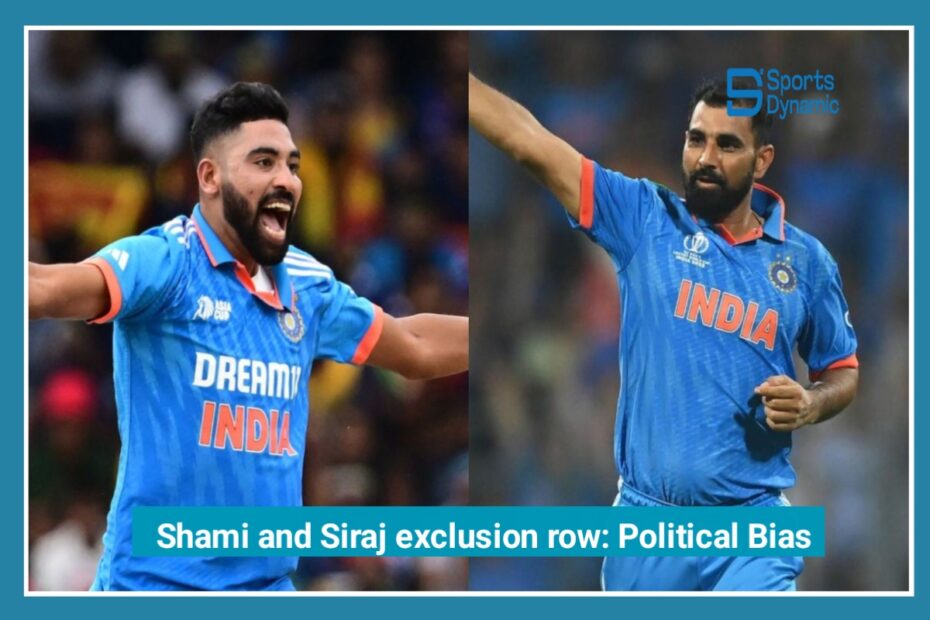
Some political leaders from the state have alleged that the exclusion of Mohammed Shami and Mohammed Siraj from India’s playing XI was driven by anti-Muslim bias.
This has turned what should have been a routine cricket discussion into a much larger and more sensitive debate. Instead of focusing only on tactics, pitch reports, and match strategies, the conversation has shifted toward questions about identity, fairness, and representation. It shows how, in today’s India, sports and politics often overlap, and how quickly a cricketing decision can become part of a wider social narrative.
Coming into the T20 World Cup 2026, India were considered one of the strongest contenders for the trophy. The squad looked balanced and powerful. There was explosive batting at the top, reliable middle-order players, quality all-rounders, and a bowling attack that combined pace and spin effectively. In the league stage, India lived up to expectations and remained unbeaten, building strong momentum and confidence.
However, things changed in the Super 8 stage. India suffered a heavy 76-run defeat against South Africa in their opening match of that round. That loss immediately increased pressure on the team management and selectors.
Whenever a strong team loses by such a big margin in a major tournament, questions are bound to be asked. Fans, experts, and former players began analysing every decision — especially the bowling combinations used in that match.
This is where the names of Mohammed Shami and Mohammed Siraj came into focus. Both are experienced fast bowlers who have represented India across formats and delivered match-winning performances in the past.
They were officially included in the 15-member squad for the World Cup, which clearly shows that the selectors value them. However, in several important matches, they were not included in the final playing XI.
Their absence sparked discussions among fans and in the media. Some felt that India might not be using their pace attack to its full potential. Others questioned whether different bowling combinations could have produced better results, especially after the defeat to South Africa. In high-pressure tournaments, even small tactical choices are examined closely.
The team management, however, has been clear in its explanation. According to officials, the decisions were based purely on cricketing reasons — things like pitch conditions, the balance of the team, opposition match-ups, and player fitness.
In T20 cricket, captains and coaches often tweak the playing XI depending on the surface and the strengths of the opposing team. It is common to rotate fast bowlers or choose different combinations depending on whether the pitch favours pace or spin.
Siraj, for instance, remains very much part of the squad and continues to train with the team. Shami’s situation is slightly more complex, as he has been managing workload and physical conditioning. After long seasons and past injury concerns, careful handling of fast bowlers has become a priority in modern cricket. Team management has indicated that factors like stress management, recovery, and maintaining peak fitness have influenced selection calls.
Despite these explanations, the issue did not remain limited to cricketing logic. Political leaders in Maharashtra publicly questioned whether religion played a role in the exclusion of the two players.
Their statements added fuel to the fire and shifted the tone of the debate. Supporters of the players argued that such concerns should not be dismissed lightly, while others strongly rejected the idea that team selection could be influenced by communal bias.
As a result, what could have been a short-lived selection debate turned into a national talking point. Television panels, social media platforms, and political forums began discussing the matter intensely. The focus moved away from tactics and performance, and toward larger questions about fairness and equality.
In reality, team selection in international cricket is rarely simple. Coaches and captains have to consider multiple factors — current form, fitness levels, pitch reports, match-ups, and long-term tournament planning. Sometimes, even star players have to sit out for strategic reasons. It happens in every major team around the world.
Still, the controversy highlights how emotionally connected people are to cricket in India. The sport is not just entertainment; it is deeply tied to national pride and identity. That is why any decision involving prominent players can quickly become sensitive.
As the tournament continues, the hope within the cricketing community is that the focus returns to performance on the field. India still have strong chances in the competition, and decisions regarding the playing XI will likely continue to evolve depending on conditions and strategy.
In the end, this episode serves as a reminder of how powerful cricket is in India — powerful enough to spark political reactions and social debates. Whether the accusations hold any substance or not, the larger lesson is clear: in a country where cricket is almost a religion, every decision is watched, questioned, and discussed far beyond the boundary line.
Political Leaders Sound the Alarm: Claims of Bias
As the criticism around team selection started getting louder on TV debates and social media platforms, the issue took a more serious turn when some political leaders from Maharashtra stepped in. What was earlier just a cricketing discussion about tactics and combinations suddenly became part of a bigger political conversation.
Leaders from the All India Majlis-e-Ittehadul Muslimeen (AIMIM) and the Samajwadi Party (SP) openly raised concerns, suggesting that the non-selection of Mohammed Shami and Mohammed Siraj might not be purely a strategic decision.
According to them, the matter deserved deeper questioning. They hinted that the two fast bowlers could have been overlooked because they belong to the Muslim community — a claim that immediately sparked strong reactions from different sides.
Mufti Ismail, an AIMIM MLA, publicly asked whether religion had played a role in the decision to keep the pace duo out of the playing XI. He even suggested that such a choice might have affected India’s performance, especially after the loss that triggered all this debate. His comments quickly grabbed headlines and led to heated discussions across political circles as well as among cricket fans.
Soon after, Samajwadi Party leader Abu Azmi shared a similar view. He said that if players were ever excluded on the basis of religion, it would go against the spirit of Indian cricket and the country’s inclusive values. He emphasized that sports, especially cricket, should rise above religious and political divisions, and that merit should always be the only factor.
What made the situation more intense was that their statements did not stop at just questioning team selection. The conversation expanded into broader concerns about minority representation, fairness, and equal opportunity in national institutions.
For some supporters, this was not just about two cricketers missing out on a match — it was about the larger issue of whether everyone feels equally represented at the highest levels.
At the same time, many others strongly disagreed with bringing religion into a cricketing matter, arguing that team selection is based on form, fitness, and match conditions. But regardless of which side people supported, one thing was clear — the debate had moved far beyond the boundary ropes.
In a country where cricket is followed almost like a religion, even a single team decision can trigger emotional and political reactions. What began as a discussion about bowling combinations turned into a much bigger conversation about identity, representation, and trust in institutions. And that is why the issue gained so much attention, far more than a regular selection debate usually would.
Pushback from Other Leaders: Politics Meets Sport
As soon as the allegations started gaining attention, there was a strong reaction from other political leaders as well. Several members of the Maharashtra government and allied parties quickly stepped forward to counter the claims and defend the team management.
Bharat Gogawale, a minister from the ruling coalition in Maharashtra, clearly rejected the idea that religion had anything to do with team selection. He made it very clear that choosing the playing XI is purely a cricketing decision.
According to him, selectors and team management look at things like pitch conditions, team balance, opposition strengths, and player roles. These decisions, he stressed, are made by professionals who understand the technical side of the game — not based on anyone’s religious background or community identity.
Other leaders also supported this view. Idris Naikwadi from the Nationalist Congress Party (Ajit Pawar faction) and Congress leader Amin Patel dismissed the communal angle completely. They pointed out that Indian cricket has a long history of diversity, with players from different religions and communities representing the country with pride.
They reminded critics that Muslim cricketers have not only been regular members of the national team but have also held leadership roles in the past. For them, suggesting bias without clear proof was unfair to the team and the selectors.
Their response showed that there is a clear political divide on how this issue is being seen. While some leaders framed it as a question of representation and possible discrimination, others viewed it strictly through the lens of sport — focusing on merit, performance, and professional judgment.
In short, what started as a debate about two fast bowlers missing out on the playing XI has now become part of a larger political conversation.
One side believes the matter should be examined more deeply, while the other insists that cricketing decisions should not be dragged into communal discussions. This difference in perspective has made the controversy even more intense, keeping it in the spotlight beyond just the cricket field.
What the Players and Experts Say
Interestingly, neither Mohammed Shami nor Mohammed Siraj has said anything publicly about the religious angle that some politicians brought up. Both players have chosen to stay quiet and focus on their cricket. This isn’t the first time they’ve found themselves in the middle of public debates.
In the past, especially Shami, has faced online trolling and unfair comments, including Islamophobic remarks on social media. During those times, his teammates and even team captains openly supported him, making it clear that he was valued for his performance and commitment to the team.
Siraj, too, has dealt with pressure and criticism at different stages of his career, but like Shami, he has usually let his performances do the talking. Their silence in this situation suggests that they prefer to stay away from political discussions and concentrate on the game.
Meanwhile, many cricket experts have tried to bring the focus back to the sport itself. Analysts and former players have explained that team selection in tournaments like the T20 World Cup is mostly about tactics.
Things like pitch conditions, whether the surface supports pace or spin, the balance of the playing XI, and the strengths of the opposition all play a big role. In T20 cricket especially, combinations change from match to match. Experts argue that such decisions are usually strategic rather than personal or identity-based.
At the same time, it’s important to understand that this controversy is part of a bigger picture. It doesn’t exist in isolation. In India, discussions about religion, representation, and fairness are already part of a larger national conversation. These debates often show up in politics, education, workplaces, and even in sports. So when a high-profile cricket decision becomes controversial, it can easily connect with those wider social concerns.
The fact that this issue was discussed not just on sports channels but also in political speeches and legislative spaces shows how sensitive and deeply rooted these topics are. Cricket in India is more than just a game. It carries emotions, national pride, and a sense of identity for millions of people. Because of that, even a team selection decision can be seen as something bigger than sport.
Many scholars and observers say that cricket in India acts like a mirror for society. It reflects hopes, tensions, and aspirations. When people feel that something is unfair — whether it actually is or just appears to be — it can quickly turn into a larger debate about who gets to represent the country and on what basis.
In such an environment, even a simple tactical call can become a flashpoint. That’s why this controversy has grown beyond cricket. It’s not only about two fast bowlers missing a match — it’s also about how sport, identity, and public perception are closely connected in today’s India.
Public Reaction: Social Media, Fans and Analysts
The reaction from the general public has been quite divided. On social media, fans and cricket commentators have been busy discussing everything in detail.
Some people are breaking down statistics — bowling averages, economy rates, power-play performances — while others are talking about match tactics and whether different combinations could have made a difference. For many fans, this is simply a cricketing debate about strategy and performance.
At the same time, there are people who feel that bringing religion into a team selection discussion is unnecessary and harmful. They argue that turning a sporting decision into a communal issue can hurt the spirit of the game.
According to them, cricket has always been seen as something that unites people across regions and communities, and dragging identity politics into it could damage that sense of unity.
On the other hand, supporters of the allegations believe the issue shouldn’t be brushed aside so quickly. They feel that concerns about representation and fairness deserve attention, especially if certain communities believe they are being sidelined. For them, this is not just about one or two matches — it connects to a larger feeling about equal opportunity and visibility in national platforms.
This clear difference in opinions shows how cricket in India often becomes more than just a sport. It acts like a reflection of society. Every selection, every benching, and every tactical move can be interpreted in different ways. What happens on the field sometimes ends up becoming part of a much larger conversation off the field.
As things stand now, India is still focused on its World Cup campaign. The team management has repeatedly stated that all decisions are based on form, fitness levels, pitch conditions, and the demands of each match. They have emphasized that religion or identity does not play any role in selecting the playing XI.
However, the political reaction in Maharashtra makes it clear that sports decisions are rarely viewed in isolation anymore — especially when they involve well-known players like Shami and Siraj. In today’s climate, even routine cricketing choices can connect with bigger discussions about belonging, representation, and fairness in society.
It’s possible that as the tournament moves forward and performances take center stage, this controversy may slowly fade away. Winning matches often shifts the narrative back to cricket. But the broader debate it has sparked is unlikely to disappear completely.
It has opened up conversations not just about team strategy, but also about how people perceive fairness and diversity in Indian institutions — including sports.
In the end, this episode once again highlights how powerful and emotional cricket is in India. It’s not just about runs and wickets; it’s also about identity, pride, and how a diverse country sees itself reflected in its national team.
Also Read This:
Ganguly Supports Sanju Samson for Permanent Role in India’s T20 and ODI Squad
Big Stage, Bigger Stakes: Semi-Final Matches Set to Define T20 World Cup 2026
FOLLOW FOR LATEST UPDATES