
Table of Contents
Strategic Choice at Eden Gardens: Why New Zealand Bowled First
On Wednesday, March 4, 2026, the iconic Eden Gardens turned into the center of the cricketing universe as it hosted one of the biggest matches of the ICC Men’s T20 World Cup — the first semi-final between South Africa and New Zealand. The atmosphere in Kolkata was electric. Fans filled the stands hours before the game, knowing fully well that a place in the final was on the line.
South Africa came into this clash as the only unbeaten team in the tournament, confident and full of momentum. On the other hand, New Zealand walked in as the determined challengers, ready to shake things up and chase a historic spot in their first-ever T20 World Cup final.
When the toss went New Zealand’s way, their captain Mitchell Santner didn’t hesitate much and chose to bowl first. It was a bold call in such a high-pressure match, but it showed clear intent.
The conditions in Kolkata during the evening can be a bit tricky — there’s often some help for bowlers early on, and later the dew can make things easier for the team chasing. Santner seemed to have all of that in mind. His decision was simple: put South Africa under pressure right from the start and don’t allow them to settle into their usual rhythm.
And honestly, that plan worked beautifully.
From the very first few overs, New Zealand’s bowlers looked sharp and focused. They weren’t just going through the motions — they were sticking to a clear strategy. The South African batting lineup is known for its power and depth, but the Kiwis didn’t let them dominate. Instead of allowing the Proteas to attack freely in the powerplay, they kept things tight and forced them to take risks.
Two players, in particular, really stood out — Cole McConchie and Rachin Ravindra. Both bowled with great control and maturity, especially considering the magnitude of the match. McConchie used his variations cleverly, not giving the batters any room to free their arms.
He kept mixing his pace and lengths, making it difficult for South Africa’s top order to line him up properly. Ravindra, meanwhile, showed impressive composure in the middle overs. He didn’t try anything flashy — just stuck to his strengths, bowled tight lines, and built pressure with dot balls.
The result? South Africa never really got that explosive momentum they are famous for.
The Proteas were led by Aiden Markram, who has been in fine form throughout the tournament. Alongside him were dangerous hitters like Dewald Brevis and the experienced finisher David Miller.
With bowlers like Kagiso Rabada and all-rounder Marco Jansen in the squad, South Africa looked like a complete and balanced side. That’s one of the reasons they were considered favorites before the match even began.
They also had the added confidence of having beaten New Zealand earlier in the group stage, which gave them a slight psychological advantage coming into this semi-final.
However, knockout games are a different story altogether.
New Zealand’s bowlers made sure South Africa never fully dominated the innings. Whenever it looked like a partnership was building, a wicket would fall. Whenever the scoring rate started to climb, a tight over would pull things back.
It wasn’t about one magical spell — it was about consistent pressure from both ends. The field placements were smart, the energy in the field was high, and the communication between players was clearly strong.
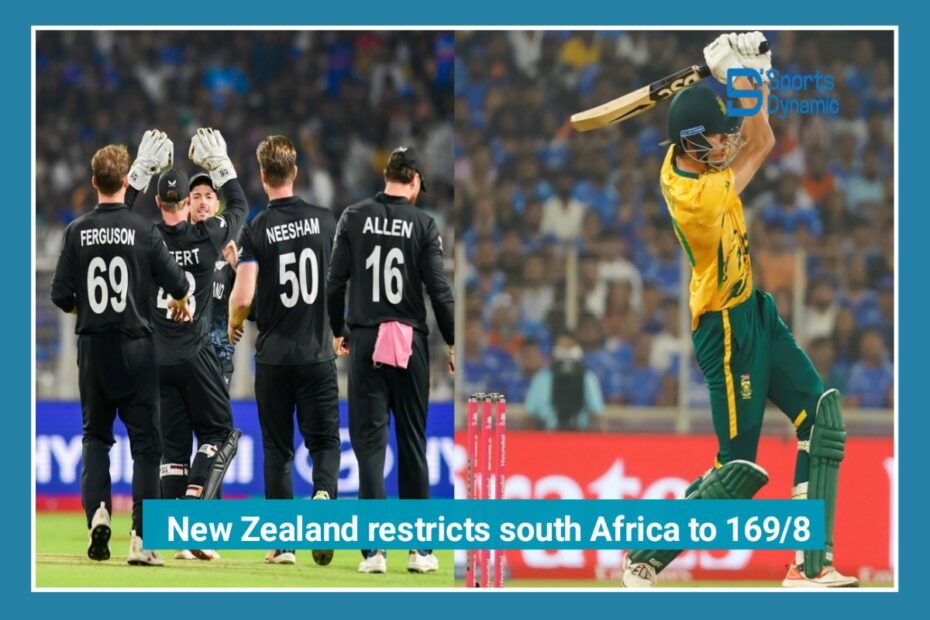
By the time the 20 overs were done, South Africa had managed to post 169 for 8. It’s not a small total by any means — especially in a high-pressure semi-final — but it also wasn’t the massive score many expected from such a powerful batting unit. On a ground like Eden Gardens, 170 is competitive, but it’s definitely chaseable if the batting side plays sensibly.
In the end, this innings was more about New Zealand’s discipline than South Africa’s failure. The Kiwis didn’t panic, didn’t lose focus, and didn’t allow the moment to overwhelm them. They stuck to their plans, trusted their bowlers, and executed under pressure — something that often makes the difference in knockout matches.
As the teams walked off the field at the innings break, you could sense that New Zealand had gained the upper hand. But in T20 cricket, especially in a World Cup semi-final, nothing is guaranteed. One good partnership, one explosive over, and the momentum can shift instantly.
Still, restricting an unbeaten South African side to 169/8 on such a big stage was a statement. It showed that New Zealand weren’t just here to participate — they were here to fight, compete, and possibly create history.
Early Breakthroughs: McConchie Rocks South Africa’s Top Order
New Zealand’s bowling plan couldn’t have started in a better way. Right from the very first over, you could see that they had come prepared with a clear strategy. They weren’t just trying to survive the powerplay — they were attacking it. And the man who made the biggest early impact was off-spinner Cole McConchie.
McConchie didn’t take long to make his presence felt. In just the second over of the innings, he delivered a massive double blow that completely changed the early mood of the match. First, he got rid of Quinton de Kock, who had started positively and looked ready to take on the bowlers.
De Kock managed a quick 10 runs, but just when it seemed like he might shift gears, McConchie outsmarted him with a cleverly paced delivery. It wasn’t a flashy ball — just smartly bowled, with the right length and subtle variation — but it was enough to force a mistake.
And before South Africa could even recover from that setback, McConchie struck again. This time it was Ryan Rickelton, who didn’t even get a chance to settle. Rickelton departed for a duck, and suddenly South Africa found themselves in serious trouble inside the powerplay. Two key top-order batters gone in quick succession — that’s the kind of start you dream of in a semi-final.
What made those wickets even more impressive was how controlled McConchie looked. He wasn’t trying anything dramatic. He simply stuck to his basics — good lines, slight changes in pace, and clever use of angles.
There was just a hint of early movement in the pitch, and he used it perfectly. Instead of giving the batters room to free their arms, he kept them guessing. That forced them into playing risky shots, and in a high-pressure knockout game, that’s all it takes.
Those early breakthroughs didn’t just hurt South Africa on the scoreboard — they shifted the entire momentum of the match. The New Zealand fielders suddenly looked more energetic, the captain looked confident with his plans, and even the crowd at Eden Gardens could feel that something special was unfolding. Every dot ball after that felt heavier, every appeal louder.
McConchie’s spell was a perfect example of calm but smart bowling. He didn’t celebrate wildly or show too much emotion. Instead, he kept his focus, stayed composed, and continued hitting the right areas. It was clever cricket — the kind that doesn’t always grab headlines instantly but makes a massive difference in big games.
By removing two dangerous openers so early, he put South Africa on the back foot almost immediately. And in a World Cup semi-final, that early pressure can shape the entire innings — which is exactly what happened.
Ravindra’s Precision: The Key Mid-Innings Break
By the end of the powerplay, South Africa were already feeling the heat at 48/2. It wasn’t a disaster on the scoreboard, but the early wickets had definitely put them under pressure. New Zealand sensed that this was their moment, and instead of easing off, they tightened their grip even more. The fielders were sharp, the bowlers were sticking to their plans, and there was a clear intent to not let South Africa settle at any cost.
That’s when Rachin Ravindra stepped up and delivered a game-changing spell.
Ravindra didn’t try to do anything extraordinary — he simply bowled smart cricket. He mixed up his pace nicely, kept his lines tight, and forced the batters to take risks if they wanted to score freely. The first big breakthrough from his spell was the wicket of South African captain Aiden Markram. Markram looked like he was starting to rebuild the innings.
He wasn’t going all out, but he was trying to steady things and form a partnership. Just when it seemed like he might anchor the innings, Ravindra outfoxed him with a cleverly disguised delivery. Markram went for an ambitious drive, mistimed it, and the ball safely landed in the hands of Daryl Mitchell. It was a huge moment in the match.
And before South Africa could regroup, Ravindra struck again.
This time it was the experienced finisher David Miller, a batter known for changing games in just a few overs. Miller’s presence at the crease always gives South Africa hope, especially in the middle and death overs. But Ravindra didn’t allow him to get comfortable. With disciplined bowling and smart variations, he forced another mistake, cutting short any chance of a momentum shift.
Those two wickets in the middle overs were absolutely crucial. South Africa were aiming for something around 190 or even 200 at one stage, but losing Markram and Miller derailed that plan. More than just the runs, it was the psychological impact that hurt them. You could see the frustration creeping in. Partnerships weren’t building, and every time they tried to accelerate, New Zealand found a way to break through.
However, to their credit, South Africa didn’t just collapse.
The lower order showed real character. Dewald Brevis played some attacking shots and tried to lift the scoring rate. Alongside him, Tristan Stubbs chipped in with valuable runs, making sure the team didn’t fall too far behind. They took calculated risks and managed to find a few boundaries at important moments.
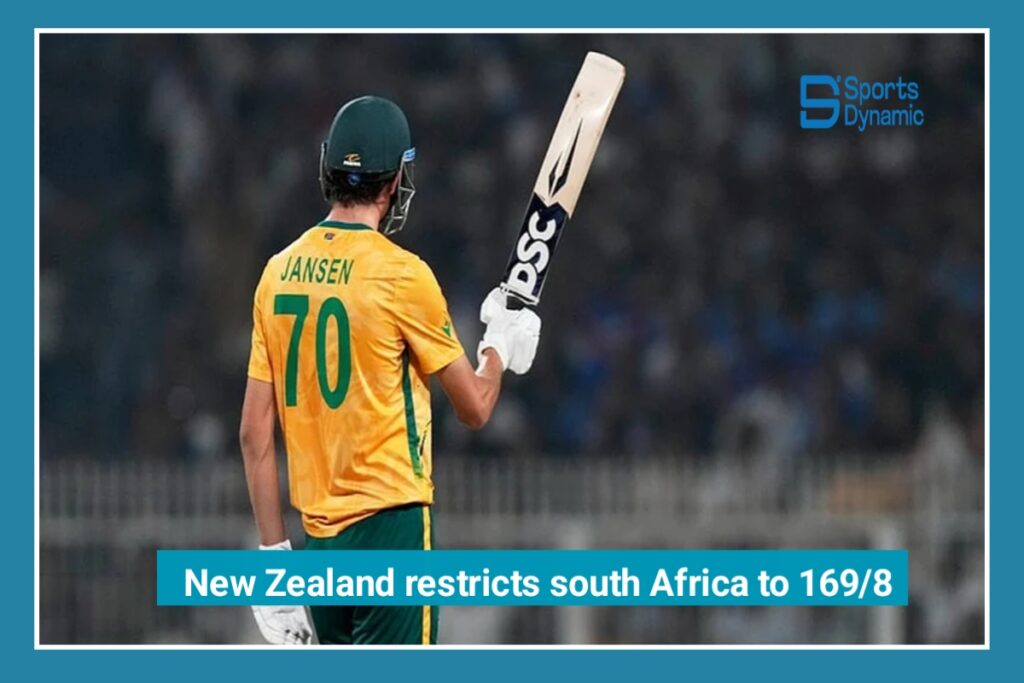
Towards the end, the Proteas got some late momentum thanks to aggressive hitting from players like Marco Jansen. Jansen, in particular, looked determined to push the total as high as possible. He went after the bowlers in the final overs, swinging hard and picking up crucial runs that added respectability to the total.
By the time the 20 overs were completed, South Africa had reached 169/8. It wasn’t the big, dominating score many expected at the start of the innings, but it was still competitive — especially in a high-pressure semi-final at Eden Gardens. On a fresh wicket, 170 can be tricky if the bowlers start well.
In the end, New Zealand’s bowlers deserved full credit for how they controlled the game. But South Africa’s late fight ensured that the match was far from one-sided. They stayed in the contest, set a target that demanded focus and discipline in the chase, and made sure the semi-final would remain exciting till the very end.
Analyzing New Zealand’s Bowling Masterclass
What really stood out about New Zealand’s bowling in this high-pressure semi-final was how flexible and smart they were with their approach. They didn’t depend only on raw pace or only on spin. Instead, they worked as a unit with a clear plan. Every bowler knew his role, and together they created situations where South African batters just couldn’t play freely. It wasn’t flashy cricket — it was thoughtful, disciplined cricket.
Smart Use of Bowlers
One of the biggest positives for New Zealand was how well they rotated their bowlers. Cole McConchie made an early impact with his off-spin. He didn’t try to spin the ball miles; instead, he relied on small changes in flight and length. Sometimes he tossed it up just enough to tempt a big shot, and other times he kept it slightly shorter to rush the batter. Those subtle adjustments made a big difference and brought important breakthroughs right at the start.
Then came Rachin Ravindra, who showed a lot of courage by bowling in the crucial middle overs. He may not always be seen as the main strike bowler, but in this match, he stepped up confidently. He didn’t shy away from taking on big names. Instead, he backed himself, stuck to tight lines, and trusted his variations. Winning those key matchups in the middle phase of the innings really shifted the balance of the game.
The seamers also played their part perfectly. Lockie Ferguson used his pace cleverly, mixing fuller deliveries with sharp short balls that kept the batters guessing. Meanwhile, Matt Henry focused on accuracy, bowling tight lines that didn’t allow easy scoring options. Together, they supported the spinners beautifully. Whenever South Africa looked like they might break free, a tight over from the pacers would pull things back.
Clever Field Placements
Another big reason behind New Zealand’s success was the captaincy of Mitchell Santner. He was constantly adjusting the field based on the situation. When a new batter came in, he set attacking fields to go for the wicket. When a partnership started building, he spread the field smartly to cut off boundaries and force singles.
Because of this, South Africa rarely found easy gaps. Even well-timed shots often went straight to fielders. You could see the frustration growing as batters tried to find open spaces but kept running into perfectly placed fielders. It showed how much planning had gone into this performance.
Building Pressure the Hard Way
In big matches like a World Cup semi-final, it’s not just about taking wickets. It’s about building pressure slowly, over by over. New Zealand did that brilliantly. They bowled plenty of dot balls, which forced the batters to take risks later. They saved boundaries with sharp fielding, cutting off what could have been fours into singles.
That constant pressure created mistakes. Batters who might usually wait patiently were forced to go for risky shots. And that’s exactly what New Zealand wanted. They balanced attack with control — defending smartly when needed but always looking for opportunities to strike.
Overall, it was a complete bowling performance. Every bowler contributed, the captain made smart decisions, and the fielders backed it up with energy and commitment. On a stage as big as a World Cup semi-final, that kind of teamwork and discipline is what separates good teams from great ones.
Looking Ahead: Can New Zealand Chase It Down?
With South Africa putting up 169/8 on the board, you could feel that the momentum had slightly shifted towards New Zealand. It’s not a small total by any means, especially in a pressure game like a semi-final. At a venue like Eden Gardens, a score around 170 can be tricky.
If the bowling side starts well and picks up early wickets, things can get tense very quickly. But at the same time, it’s also a chaseable target if the batting team stays calm and sticks to a clear plan.
Now the focus completely moves to New Zealand’s batters. Their bowlers have already done the hard work by restricting a strong South African lineup. The question is — can the batters show the same level of discipline and smart decision-making? In big matches like this, it’s not just about power-hitting. It’s about building partnerships, rotating strike, and knowing when to attack.
Historically, neither South Africa nor New Zealand has managed to win a men’s T20 World Cup title. That adds even more pressure to this clash. This isn’t just another knockout game — it’s a chance to move one step closer to creating history. In moments like these, skill matters, but so do nerves and game awareness. One small mistake can change everything.
All eyes are now on New Zealand’s batting lineup. Experienced players like Tim Seifert, the explosive Glenn Phillips, and the aggressive opener Finn Allen will carry a lot of responsibility. They have the ability to chase down this total, but they’ll need to handle the pressure smartly. A steady start, a solid middle phase, and a composed finish — that’s what it will take to cross the line.
A Semi-Final That Feels Special
This 2026 T20 World Cup semi-final between South Africa and New Zealand truly feels like one of those matches people will remember for a long time. It had everything — tension, smart tactics, big wickets, and individual brilliance. The intensity was visible in every over.
New Zealand’s bowlers, especially Cole McConchie and Rachin Ravindra, executed their plans almost perfectly. They didn’t allow South Africa’s dangerous batting lineup to dominate. Instead, they kept things tight, picked up wickets at key moments, and made sure the total stayed within reach.
Now, with a place in the final within touching distance, the Black Caps have a golden opportunity. But in T20 cricket, nothing is guaranteed until the last ball is bowled. One brilliant spell from South Africa or one sudden collapse can turn the game upside down.
The crowd at Eden Gardens is ready for a thrilling chase. The atmosphere is electric, the stakes couldn’t be higher, and both teams know what’s on the line. This isn’t just about reaching a final — it’s about writing a new chapter in their cricketing history. And as the second innings begins, it feels like we’re about to witness something truly unforgettable.
Also Read This:
New Zealand opts to Bowl First in Thrilling T20 Semi-Final Clash Against South Africa
T20 World Cup Semifinal Preview: India’s Home Advantage vs England’s Fearless Approach
FOLLOW FOR LATEST UPDATES